What Is Craniosacral Therapy?
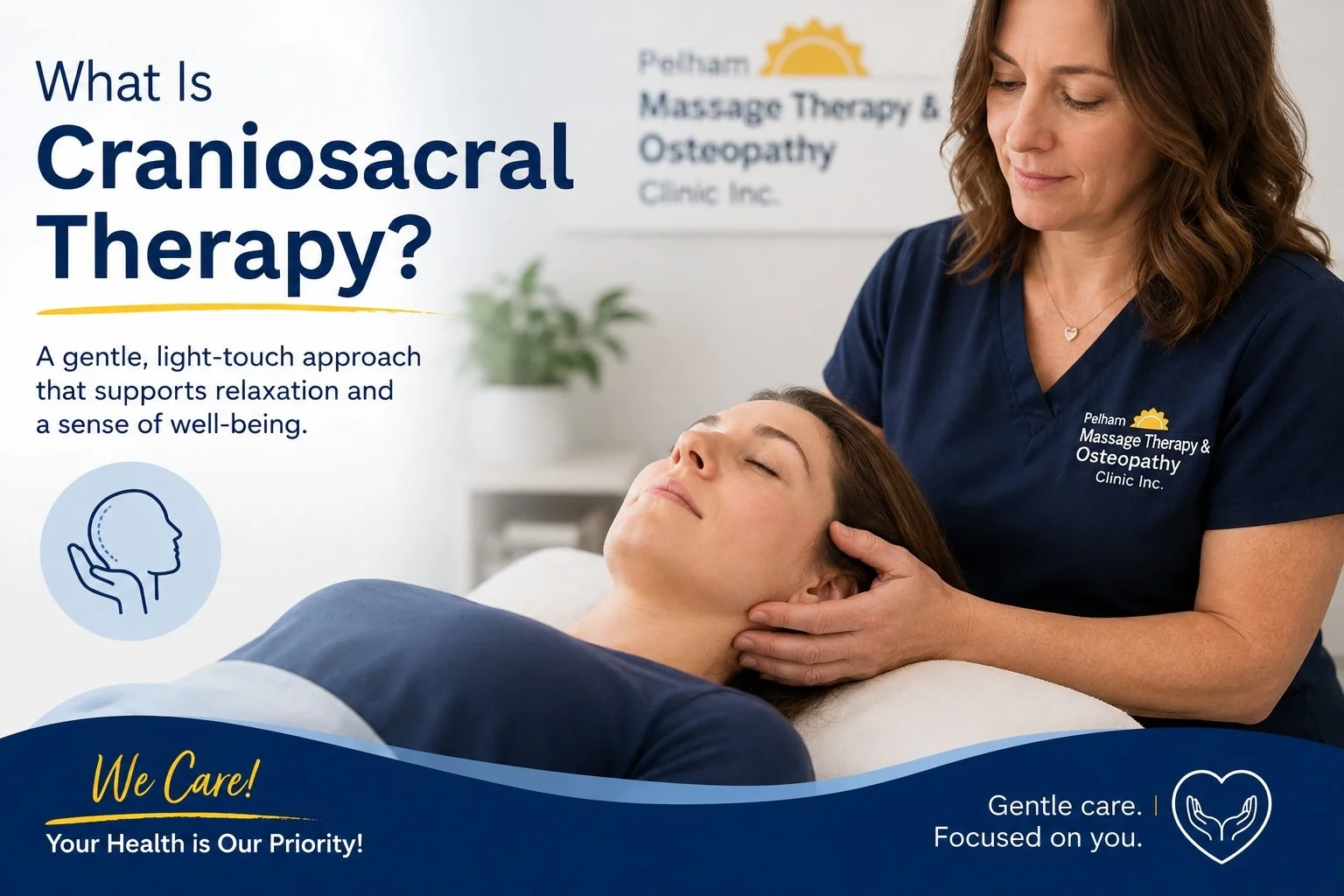
Craniosacral Therapy (CST) is a gentle, hands-on approach that uses light touch and subtle techniques. It is often chosen by people who are looking for a quieter, gentler form of hands-on care or who may not prefer deeper pressure.
Craniosacral Therapy has roots in osteopathic practice and was further developed and taught as a distinct approach by osteopathic physician Dr. John Upledger in the 1970s.
At Pelham Massage Therapy & Osteopathy Clinic in Fonthill, Craniosacral Therapy is offered by Allison Noble, RMT, who has completed Level 1 and Level 2 Craniosacral Therapy training.
What Is the Craniosacral System?
The term craniosacral refers to the area extending from the cranium (skull) to the sacrum at the base of the spine.
The brain and spinal cord are surrounded by protective membranes and cerebrospinal fluid. Craniosacral Therapy developed from concepts involving these structures and the gentle application of manual techniques around the head, spine, sacrum and other areas of the body.
CST uses a much lighter touch than many traditional massage techniques.
What Does Craniosacral Therapy Involve?
During Craniosacral Therapy, the practitioner uses gentle hand placements and very light contact at different areas of the body.
Depending on the individual session, contact may include areas such as the:
Head and skull
Neck
Shoulders
Spine
Sacrum
Feet
Rather than using deep pressure or forceful manipulation, Craniosacral Therapy is characterized by slow, subtle hands-on techniques.
The approach is individualized according to the client's needs, comfort and treatment goals.
What Does a Craniosacral Therapy Session Feel Like?
Craniosacral Therapy can feel quite different from a traditional massage.
Clients generally remain fully clothed while resting comfortably on the treatment table. The therapist uses gentle, sustained contact rather than kneading or deeper massage techniques.
Many people find this type of quiet, light-touch treatment relaxing. Experiences vary from person to person, and there is no particular sensation that you need to experience during a session.
Communication is always encouraged, and your therapist can adjust the treatment according to your comfort.
Why Do People Choose Craniosacral Therapy?
There are many reasons someone may be interested in exploring Craniosacral Therapy.
Some people simply prefer a lighter approach to hands-on care. Others may choose it when they are feeling tense or stressed and would like a quiet, relaxing treatment experience.
It may also appeal to people who:
Prefer very light pressure
Find deeper massage uncomfortable
Are looking for a gentle hands-on approach
Want to incorporate relaxation-focused care into their wellness routine
Are interested in exploring a different type of manual therapy
Craniosacral Therapy should not be considered a replacement for appropriate medical assessment or treatment when a health condition is present.
Craniosacral Therapy and Massage Therapy
Although both involve hands-on care, Craniosacral Therapy and traditional Massage Therapy use different approaches.
Massage Therapy commonly works directly with muscles and soft tissues using techniques that can range from gentle Swedish massage to more targeted or deeper-pressure techniques.
Craniosacral Therapy uses much lighter contact and subtle hand placements.
For an RMT with appropriate training, craniosacral techniques may be incorporated into an individualized Massage Therapy treatment when appropriate and with the client's consent.
Craniosacral Therapy and Osteopathy
Craniosacral Therapy has historical roots in osteopathic medicine, but Craniosacral Therapy and Osteopathic Manual Therapy should not be considered the same treatment.
Osteopathic Manual Therapy uses its own assessment and treatment approach and may involve a variety of manual techniques depending on the practitioner and the client's needs.
At our clinic, Massage Therapy and Osteopathy are separate services provided by appropriately trained practitioners.
What Does the Research Say?
Research into Craniosacral Therapy is ongoing, and evidence for its effectiveness in treating specific medical conditions remains limited.
For this reason, we prefer to describe Craniosacral Therapy for what it is: a gentle, light-touch form of hands-on care that some clients find relaxing and comfortable.
We do not present Craniosacral Therapy as a cure or replacement for medical care.
If you are experiencing persistent pain, headaches, neurological symptoms or another health concern, speak with an appropriate regulated healthcare professional about your symptoms.
Craniosacral Therapy at Pelham Massage Therapy & Osteopathy Clinic
Allison Noble, RMT has completed Level 1 and Level 2 Craniosacral Therapy training and offers this gentle approach at Pelham Massage Therapy & Osteopathy Clinic.
Our clinic is located in Fonthill, Ontario, and welcomes clients from Pelham, Welland, Thorold, St. Catharines, Niagara Falls, Fenwick, Port Colborne and throughout the Niagara Region.
If you are curious about Craniosacral Therapy and would like to experience a gentle approach to hands-on care, Allison would be happy to discuss your treatment goals and preferences with you.
Related Services
Massage Therapy
Individualized Massage Therapy ranging from relaxation-focused care to more targeted treatment based on your needs and preferences.
TMJ Massage Therapy
Massage Therapy focused on the muscles and soft tissues associated with the jaw, face, head and neck.
Osteopathy
Individualized Osteopathic Manual Therapy using a whole-body approach to assessment and treatment.
Book Craniosacral Therapy in Fonthill
Interested in trying Craniosacral Therapy?
Book an appointment with Allison Noble, RMT at Pelham Massage Therapy & Osteopathy Clinic.
Connect With Us
Connect With Us
🌐 Website
📞 Call Us: 289-501-4229
💙 We Care! Your Health is Our Priority!
This article is provided for general educational purposes and is not intended to diagnose, treat or cure a medical condition. Individual treatment needs vary. If you have a health concern or are unsure whether a treatment is appropriate for you, consult an appropriate healthcare professional.