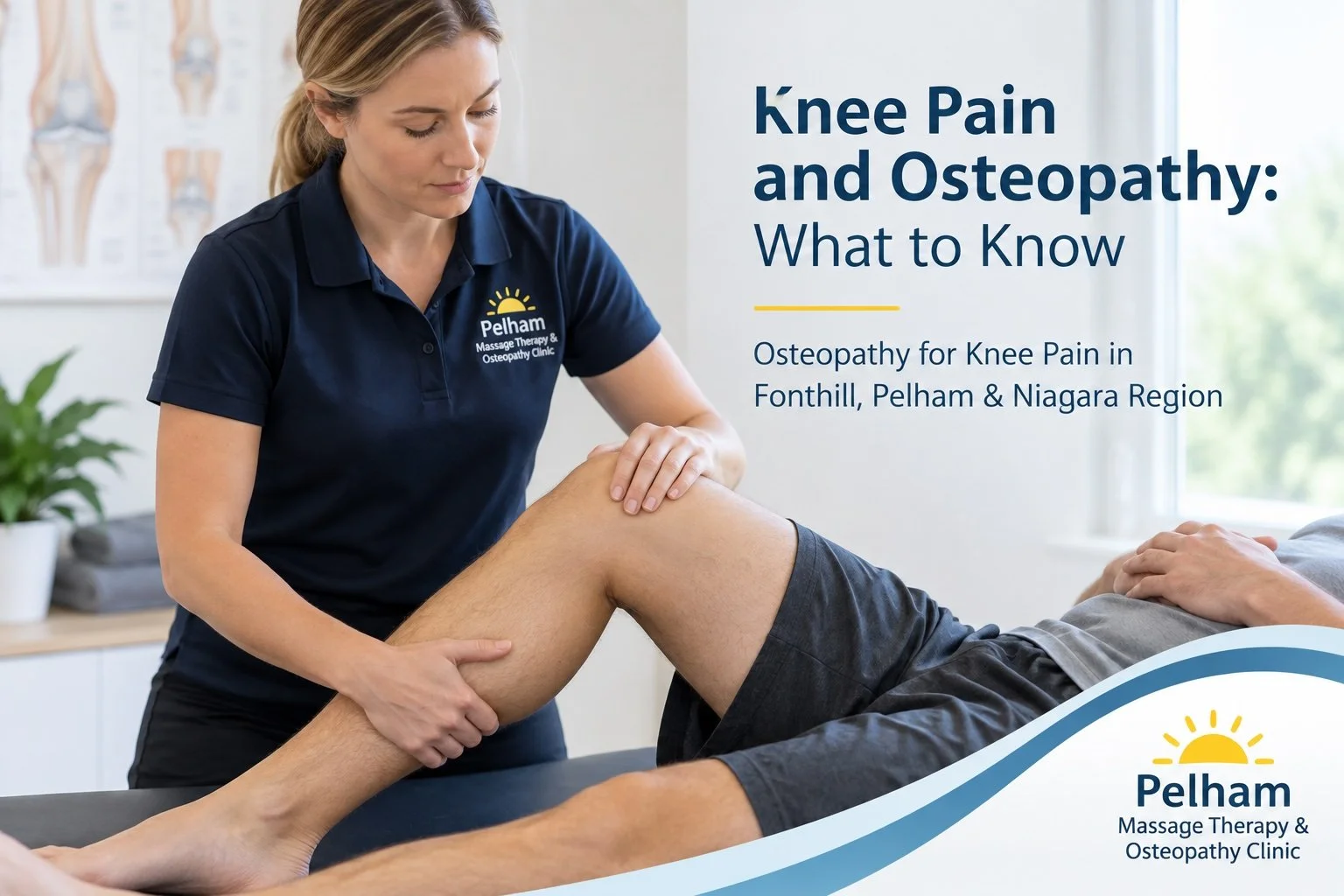
Osteopathy for Knee Pain in Fonthill, Pelham & Niagara Region
Knee pain can affect walking, stairs, exercise, work, and everyday activities. Symptoms may begin after an injury, develop gradually over time, or be associated with changes in activity, joint mobility, or movement patterns.
At Pelham Massage Therapy & Osteopathy Clinic in Fonthill, manual osteopathy provides a hands-on approach to assessing mobility and movement in people experiencing knee-related concerns.
Our clinic serves clients from Fonthill, Pelham, Welland, Thorold, St. Catharines, Niagara Falls, Niagara-on-the-Lake, and surrounding Niagara Region communities.
Understanding Knee Pain
The knee is a complex joint involved in walking, running, squatting, climbing stairs, and many other daily movements.
Knee discomfort may be associated with:
Overuse
Sports activity
Joint strain
Osteoarthritis
Muscle or soft-tissue tension
Changes in foot or ankle mechanics
Hip mobility
Previous injuries
Changes in walking or movement patterns
Because the knee works together with the hip, ankle, pelvis, and lower back, an osteopathic assessment may consider more than the knee itself.
Common Knee Concerns
People may seek assessment for a variety of knee-related concerns.
Osteoarthritis
Knee osteoarthritis can be associated with:
Stiffness
Swelling
Discomfort during movement
Reduced range of motion
Clicking or grinding sensations
Manual osteopathy may include assessment of joint mobility, surrounding soft tissues, and related movement patterns.
Patellofemoral Pain
Pain around or behind the kneecap may be associated with activities such as running, cycling, squatting, stairs, or repetitive movement.
An assessment may consider:
Hip mobility
Lower-limb movement
Foot and ankle mechanics
Muscle tension
Walking or movement patterns
Ligament Injuries
Ligament injuries involving structures such as the ACL or MCL can cause pain, swelling, or a feeling of instability.
Significant ligament injuries should be medically assessed. Manual treatment may only be appropriate depending on the stage of healing and the individual presentation.
Meniscus Injuries
Meniscus injuries may occur with twisting movements, sports activity, or age-related changes.
Symptoms may include:
Pain
Swelling
Reduced movement
Catching or locking sensations
Persistent locking or significant swelling should be appropriately medically assessed.
Tendon and Overuse Concerns
Repetitive activity may affect tendons or soft tissues around the knee.
Examples include:
Patellar tendon irritation
Quadriceps tendon irritation
IT band-related symptoms
Repetitive strain from sport or activity
An osteopathic practitioner may assess mobility and movement in the knee and related areas of the lower body.
What Is Manual Osteopathy?
Manual osteopathy is a hands-on approach that considers how joints, muscles, fascia, and movement patterns work together.
An appointment may include assessment of:
Joint mobility
Soft-tissue tension
Posture
Gait
Range of motion
Lower-limb movement
Related areas such as the hip, pelvis, ankle, or lower back
Treatment techniques are selected based on the individual assessment and may include gentle joint mobilization, soft-tissue techniques, fascial techniques, or other manual approaches within the practitioner’s scope.
How Osteopathy May Be Used for Knee Concerns
Rather than focusing only on the location of discomfort, an osteopathic assessment may look at the movement of the entire lower limb.
Knee Mobility
The practitioner may assess how the knee bends, straightens, and moves during functional activities.
Hip and Pelvic Movement
Hip and pelvic mechanics may influence how force is transferred through the leg during standing, walking, or exercise.
Foot and Ankle Mechanics
The foot and ankle can affect how the lower limb moves and loads during daily activity.
Soft-Tissue Tension
Muscles around the thigh, calf, hip, and lower leg may become tense or guarded when a person changes how they move.
Walking and Movement Patterns
An osteopathic assessment may also consider gait, posture, and other movement patterns relevant to the client’s symptoms.
What to Expect During an Osteopathy Appointment
Your appointment may include:
A health history
Discussion of your symptoms
Review of previous injuries
Discussion of work, sport, and daily activity
Range-of-motion assessment
Joint mobility assessment
Gait or movement observation
Hands-on osteopathic treatment
Treatment is individualized based on the assessment, the client’s health history, and their comfort.
Osteopathy for Active Adults and Athletes
Knee concerns are common in people who participate in:
Running
Hiking
Cycling
Hockey
Golf
Gym training
Pickleball
Recreational sports
An osteopathic assessment may consider how the knee, hip, ankle, and other areas are moving during activity.
Osteopathy and Arthritis-Related Knee Concerns
People with osteoarthritis may seek manual osteopathy because they are experiencing stiffness, reduced mobility, or changes in movement.
Treatment is adapted to the individual and may focus on gentle assessment and treatment of relevant joints and soft tissues.
Manual osteopathy is not a replacement for medical management of arthritis, and some people may require additional medical care depending on their symptoms and diagnosis.
When Should Knee Pain Be Medically Assessed?
Medical assessment may be appropriate if you experience:
Significant swelling
Inability to bear weight
Severe or worsening pain
A visibly deformed joint
Significant instability
Locking of the knee
Numbness or loss of sensation
Fever or redness associated with the joint
Symptoms following significant trauma
Severe or persistent symptoms may require imaging or further medical evaluation.
General Knee Health Considerations
Depending on the individual, general strategies that may be discussed with an appropriate healthcare professional can include:
Gradual return to activity
Supportive footwear
Regular movement
Avoiding sudden increases in training volume
Taking movement breaks during prolonged sitting
Seeking assessment when symptoms persist or worsen
Any exercise or rehabilitation recommendations should be appropriate for the individual and their condition.
Frequently Asked Questions About Osteopathy and Knee Pain
Can osteopathy be used for chronic knee pain?
People with ongoing knee symptoms may choose to have their mobility, movement patterns, and surrounding areas assessed by a manual osteopathic practitioner.
Is osteopathic treatment painful?
Treatment techniques are generally adjusted to the individual’s comfort and presentation.
How many treatments will I need?
There is no set number of treatments. Frequency depends on the individual, their symptoms, health history, assessment findings, and goals.
Can osteopathy be used if I have arthritis?
Some people with arthritis choose manual osteopathy for assessment of mobility and movement. Treatment should be adapted to the individual and does not replace appropriate medical care.
Do I need a referral?
A referral is generally not required to book an osteopathy appointment, although insurance requirements can vary.
Osteopathy in Fonthill, Pelham & Niagara Region
Pelham Massage Therapy & Osteopathy Clinic provides manual osteopathy in Fonthill for clients from:
Pelham
Welland
Thorold
St. Catharines
Niagara Falls
Niagara-on-the-Lake
Surrounding Niagara Region communities
If you are experiencing knee discomfort or changes in mobility and would like to have your movement assessed, you can book an osteopathy appointment at our Fonthill clinic.