Do You Have Plantar Fasciitis? How Can Massage Therapy Help?
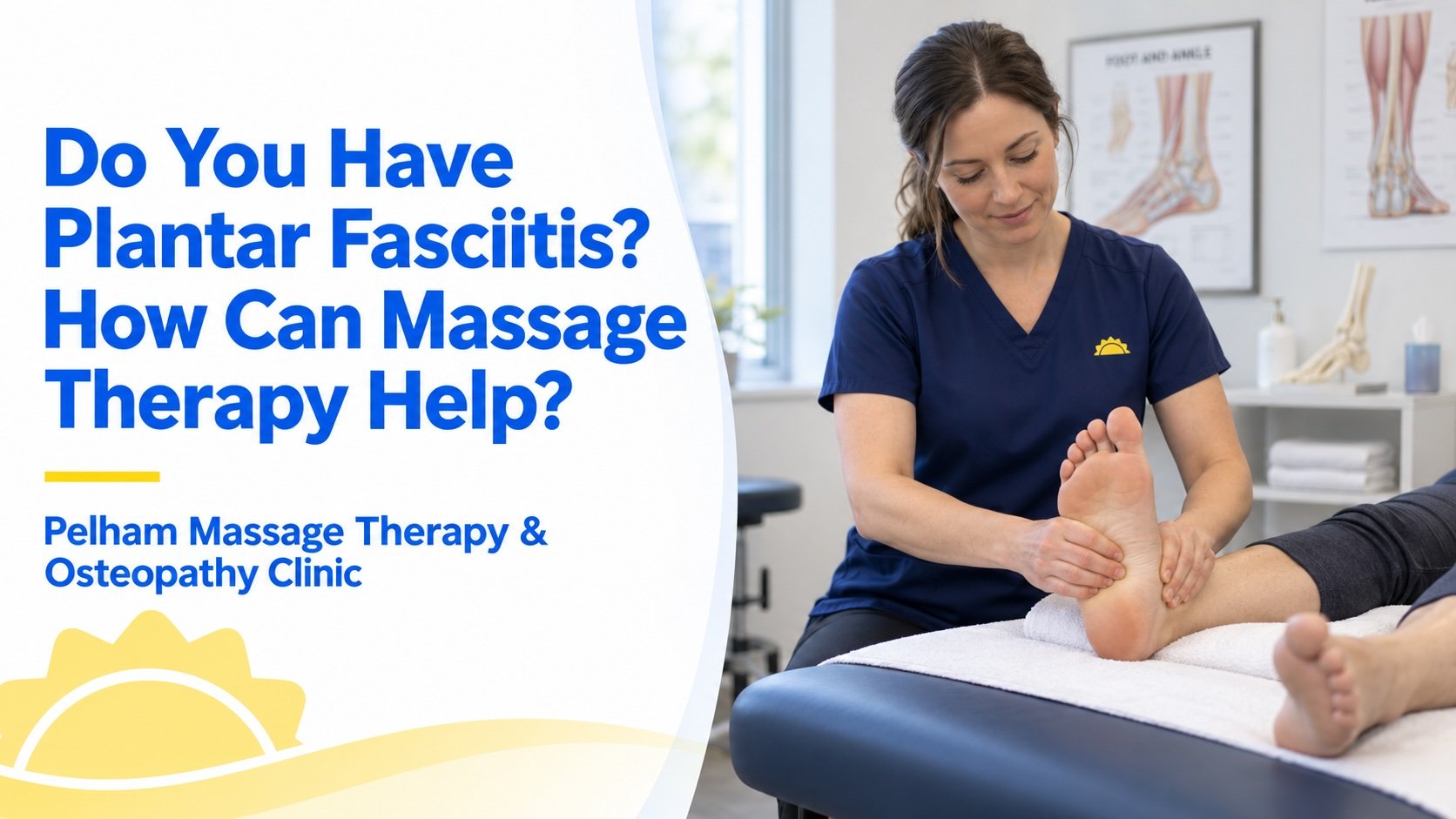
Massage Therapy and Plantar Fasciitis in Fonthill, Pelham & Niagara Region
Plantar fasciitis is a common cause of heel and foot discomfort. People with plantar fasciitis may notice pain near the heel, discomfort with the first few steps in the morning, or symptoms after prolonged standing or activity.
At Pelham Massage Therapy & Osteopathy Clinic in Fonthill, Registered Massage Therapists may assess and treat muscles and soft tissues of the lower leg, ankle, and foot when appropriate within the scope of Massage Therapy.
Our clinic serves clients from Fonthill, Pelham, Welland, Thorold, St. Catharines, Niagara Falls, Niagara-on-the-Lake, Port Colborne, and surrounding Niagara Region communities.
What Is Plantar Fasciitis?
The plantar fascia is a strong band of connective tissue along the bottom of the foot that extends from the heel toward the toes.
Plantar fasciitis is commonly associated with irritation of this tissue.
Symptoms may include:
Heel pain
Discomfort with the first steps in the morning
Tenderness along the bottom of the foot
Foot discomfort after standing or walking
Tightness in the foot or lower leg
Symptoms that change with activity
Symptoms can vary from person to person.
What Can Contribute to Plantar Fasciitis?
Several factors may be associated with plantar fasciitis, including:
Changes in activity level
Running or repetitive activity
Prolonged standing
Footwear
Calf tightness
Foot and ankle mobility
Individual foot mechanics
Repetitive loading of the foot
Because heel pain can have different causes, an appropriate assessment is important.
Massage Therapy and Plantar Fasciitis
Massage Therapy may be considered when muscles and soft tissues of the lower leg, ankle, or foot are contributing to a client’s symptoms or movement concerns.
A Registered Massage Therapist may assess areas such as:
Calf muscles
Lower leg
Ankle
Foot
Plantar surface of the foot
Related soft tissues
Treatment is based on the individual assessment and the client’s tolerance and goals.
Calf and Lower-Leg Tension
Muscles in the calf and lower leg are connected to structures that influence movement at the ankle and foot.
A Registered Massage Therapist may assess these areas when a client reports plantar heel or foot discomfort.
Treatment may include techniques directed toward muscles and other soft tissues within the RMT’s scope of practice.
Foot and Ankle Mobility
Movement of the ankle and foot can influence standing, walking, and other daily activities.
During a Massage Therapy assessment, an RMT may consider how the ankle and foot are moving and whether soft-tissue tension is present.
Areas That May Be Included in Treatment
Depending on the assessment, treatment may involve:
Calf muscles
Muscles of the lower leg
Foot muscles
Soft tissues surrounding the ankle
Plantar surface of the foot
Related areas of muscular tension
Not every client requires treatment of all of these areas.
What to Expect During Your Massage Therapy Appointment
Your appointment may include:
A health history
Discussion of your symptoms
Review of your activity level
Assessment of relevant muscles and soft tissues
Massage Therapy treatment
General self-care or movement suggestions where appropriate
Treatment pressure and techniques are adjusted to the individual.
Can Osteopathy Be Considered Too?
Massage Therapy and osteopathy are separate services with different assessment and treatment approaches.
A Registered Massage Therapist focuses on assessment and treatment within the scope of Massage Therapy.
A manual osteopathic practitioner may assess mobility and movement in the foot, ankle, lower limb, and other related areas.
Which service is appropriate depends on the individual’s concerns and goals.
When Should Heel Pain Be Medically Assessed?
Heel or foot pain should be appropriately assessed if symptoms are severe, persistent, worsening, or interfering significantly with normal activity.
Medical assessment may be appropriate if you experience:
Significant swelling
Inability to bear weight
Numbness or loss of sensation
Sudden severe pain
Redness or warmth
Symptoms following significant trauma
Symptoms that are not improving
Massage Therapy in Fonthill, Pelham and Niagara Region
Pelham Massage Therapy & Osteopathy Clinic provides Massage Therapy in Fonthill for clients from:
Pelham
Welland
Thorold
St. Catharines
Niagara Falls
Niagara-on-the-Lake
Port Colborne
Communities throughout the Niagara Region
If you are experiencing heel or foot discomfort and would like to have the relevant muscles and soft tissues assessed, you can book an appointment with one of our Registered Massage Therapists.
Related Services
Book a Massage Therapy Appointment
If plantar fasciitis is affecting your ability to walk, work, or stay active, massage therapy may help improve movement and reduce discomfort.
Our Pelham clinic proudly serves clients across the Niagara Region, including Fonthill, Welland, Thorold, St. Catharines, Niagara Falls, Niagara-on-the-Lake, and Port Colborne.
🌐 Website
📞 Call Us: 289-501-4229
We care. Your health is our priority!
Marjorie Dickson, RMT