Circulation and Massage Therapy: What to Know
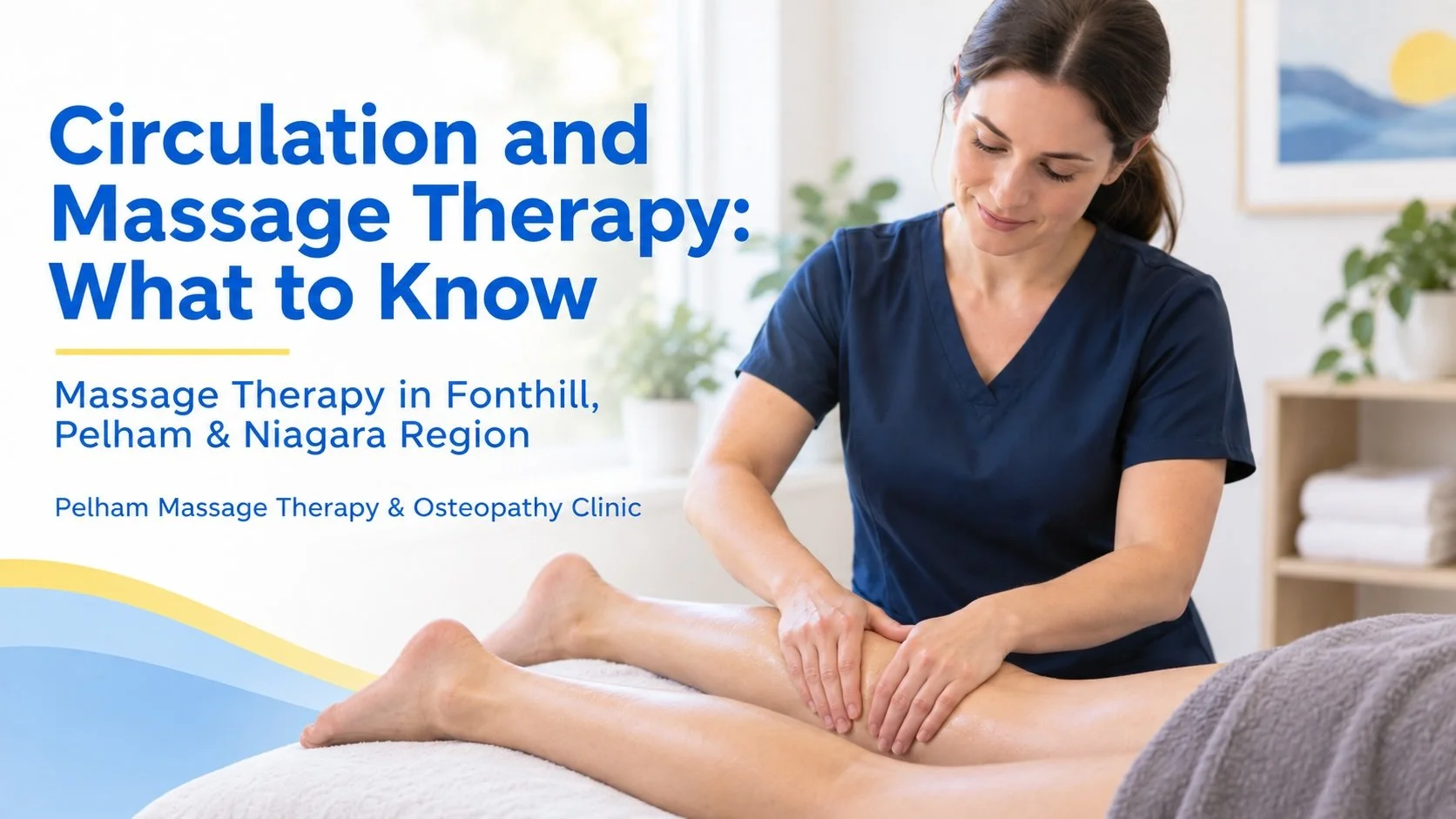
Massage Therapy in Fonthill, Pelham & Niagara Region
Circulation plays an important role in moving blood, oxygen, nutrients, and other substances throughout the body.
People sometimes use the phrase “poor circulation” when they notice symptoms such as cold hands or feet, heaviness, swelling, fatigue, or changes in how their limbs feel. However, these symptoms can have many different causes and are not always related to circulation itself.
At Pelham Massage Therapy & Osteopathy Clinic in Fonthill, Registered Massage Therapists provide individualized Massage Therapy based on each client’s health history, assessment, comfort, and treatment goals.
What Is Circulation?
The circulatory system includes the heart, blood, and blood vessels.
Its role is to move blood throughout the body and transport:
Oxygen
Nutrients
Hormones
Blood cells
Metabolic products
Circulation is influenced by many factors, including activity, body position, temperature, overall health, cardiovascular function, and blood-vessel function.
What Do People Mean by “Poor Circulation”?
The term “poor circulation” is often used informally to describe symptoms such as:
Cold hands or feet
Heavy or tired legs
Swelling
Numbness or tingling
Changes in skin colour
Fatigue in the limbs
Discomfort after prolonged sitting or standing
These symptoms can have different causes, so they should not automatically be assumed to be a circulation problem.
Persistent, unexplained, or worsening symptoms should be medically assessed.
Does Massage Therapy Improve Circulation?
Massage Therapy is not advertised at our clinic as a treatment for circulatory disease or as a way to correct poor circulation.
Massage Therapy focuses on assessment and treatment of muscles and other soft tissues within the scope of practice of a Registered Massage Therapist.
Some clients choose Massage Therapy when they are also experiencing:
Muscle tension
Soft-tissue discomfort
Stiffness
Tension from prolonged sitting or standing
General relaxation needs
The treatment plan is based on the individual rather than on a promise to improve circulation.
Why Is Circulation Important to Discuss During Massage Therapy?
Your health history is an important part of Massage Therapy.
Before treatment, your RMT may ask about:
Swelling
Cardiovascular conditions
Blood-clotting concerns
Medications
Changes in sensation
Previous surgeries
Changes in skin colour or temperature
Other health conditions
This helps the therapist determine whether Massage Therapy is appropriate and whether medical assessment may be needed first.
Massage Therapy and Swelling
Swelling can have many causes.
It may be related to factors such as injury, prolonged positioning, medication, cardiovascular conditions, lymphatic conditions, or other medical concerns.
Because of this, unexplained or persistent swelling should not be treated as a simple circulation issue.
At our clinic, Massage Therapy is not used to diagnose the cause of swelling.
What About Manual Lymphatic Drainage?
Manual Lymphatic Drainage, or MLD, is a gentle hands-on technique that uses light, rhythmic movements.
At Pelham Massage Therapy & Osteopathy Clinic, MLD is offered as a wellness-focused Massage Therapy service.
It is not advertised as treatment for circulatory disease, lymphedema, post-surgical recovery, or other medical conditions.
Clients with unexplained swelling or known medical conditions affecting circulation or the lymphatic system should seek appropriate medical guidance.
When Should Circulation-Related Symptoms Be Medically Assessed?
Seek medical assessment for symptoms such as:
Sudden swelling
Swelling on one side of the body
Redness or warmth
New numbness or weakness
Sudden colour changes
Persistent coldness in a limb
Severe pain
Shortness of breath
Chest pain
Symptoms that are worsening
These symptoms may require medical care rather than Massage Therapy.
What to Expect During a Massage Therapy Appointment
Your appointment may include:
A health history
Discussion of your current symptoms
Review of medications and relevant health conditions
Assessment of muscles and soft tissues
Massage Therapy treatment
Adjustments to pressure and positioning based on comfort
Treatment is individualized and does not rely on a one-size-fits-all approach.
Massage Therapy in Fonthill, Pelham & Niagara Region
Pelham Massage Therapy & Osteopathy Clinic provides Massage Therapy in Fonthill for clients from:
Pelham
Welland
Thorold
St. Catharines
Niagara Falls
Niagara-on-the-Lake
Surrounding Niagara Region communities
If you are experiencing muscular tension, stiffness, or soft-tissue discomfort and are unsure whether Massage Therapy is appropriate, you can discuss your concerns with one of our Registered Massage Therapists.
Related Services
Book Your Massage Therapy Appointment Today
Massage therapy can help support circulation, reduce tension, and encourage your body to function more efficiently and comfortably.
🌐 Website
📞 Call Us: 289-501-4229
We Care! Your Health is Our Priority!
Marjorie Dickson, RMT