Sleeper Stretch
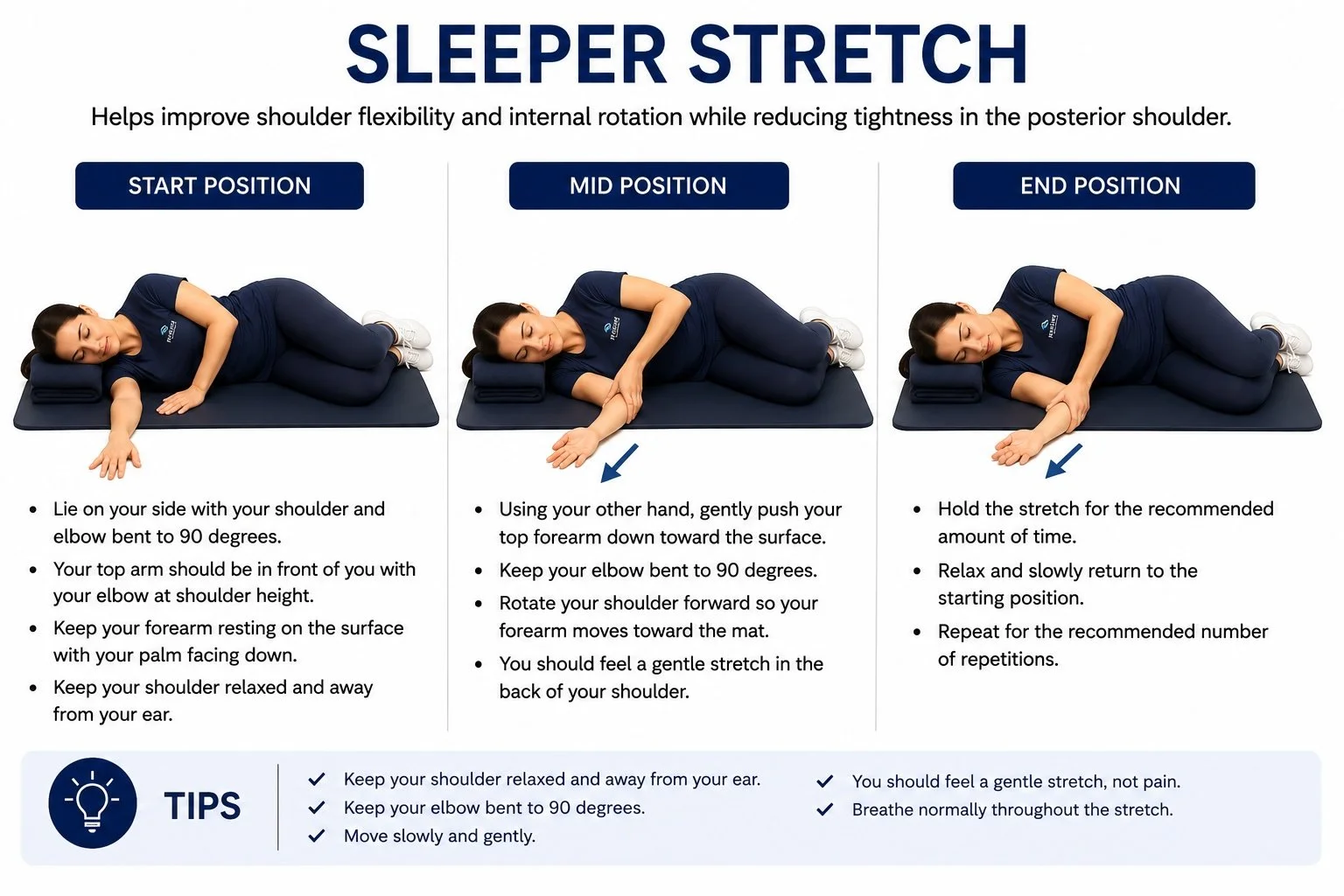
The Sleeper Stretch is a gentle mobility exercise designed to support shoulder internal rotation and address tightness in the back of the shoulder. It is commonly used to support shoulder flexibility, range of motion, and comfortable shoulder movement.
What Does This Exercise Help?
This exercise may help support:
Shoulder stiffness
Loss of internal shoulder rotation
Rotator cuff tightness
Shoulder impingement
Frozen shoulder
Tightness from repetitive overhead activities
Benefits
Improves shoulder internal rotation
Increases shoulder flexibility
Reduces tightness in the posterior shoulder
Supports healthy shoulder mechanics
May help improve overhead movement
Equipment Needed
Exercise mat or comfortable surface
Starting Position
Lie on your side with the affected shoulder underneath you.
Bend your shoulder and elbow to approximately 90 degrees.
Keep your shoulder blade gently pulled back and your body stacked comfortably.
Use your top hand to support your lower forearm.
Step 1
Using your top hand, gently guide your lower forearm toward the floor.
Step 2
Lower your forearm only until you feel a gentle stretch at the back of your shoulder.
Do not force the movement or push into pain.
Step 3
Hold the stretch for 20–30 seconds, then slowly return to the starting position.
Repeat for the recommended number of repetitions.
Recommended Repetitions
Hold for 20–30 seconds
Repeat 3–5 times
Perform once or twice daily, or as recommended by your healthcare provider
Tips
Stretch gently without forcing the movement.
Keep your shoulder blade stable throughout the exercise.
Breathe normally while holding the stretch.
Stop before you feel pain.
Move slowly and with control.
Common Mistakes
Pushing too aggressively into the stretch
Rolling backward instead of staying on your side
Allowing the shoulder blade to lift excessively
Holding your breath
Stretching through pain
Stop the Exercise If
Stop and consult your healthcare provider if you experience:
Sharp shoulder pain
Numbness or tingling
Increased pain after the exercise
Shoulder instability or a feeling that the shoulder is slipping
Related Conditions & Concerns
This exercise may be included as part of an individualized home-care plan for concerns such as:
Frozen shoulder
Shoulder impingement
Rotator cuff-related shoulder concerns
Shoulder stiffness
Limited internal rotation
Related Services
Need More Help?
If shoulder stiffness, discomfort, or limited movement is affecting your daily activities, our team at Pelham Massage Therapy & Osteopathy Clinic Inc. may be able to help.
Our Registered Massage Therapists (RMTs) may recommend home-care exercises within the scope of Massage Therapy when appropriate as part of an individualized treatment plan.
Our Manual Osteopathic Practitioner may also provide movement or home-care recommendations related to your individual osteopathic treatment.Disclaimer
This exercise is intended for general educational purposes only and should not replace professional medical advice, diagnosis, or treatment. Stop the exercise if you experience significant pain or worsening symptoms, and consult your healthcare provider if you are unsure whether this exercise is appropriate for you.
Pelham Massage Therapy & Osteopathy Clinic Inc.