Levator Scapulae Stretch
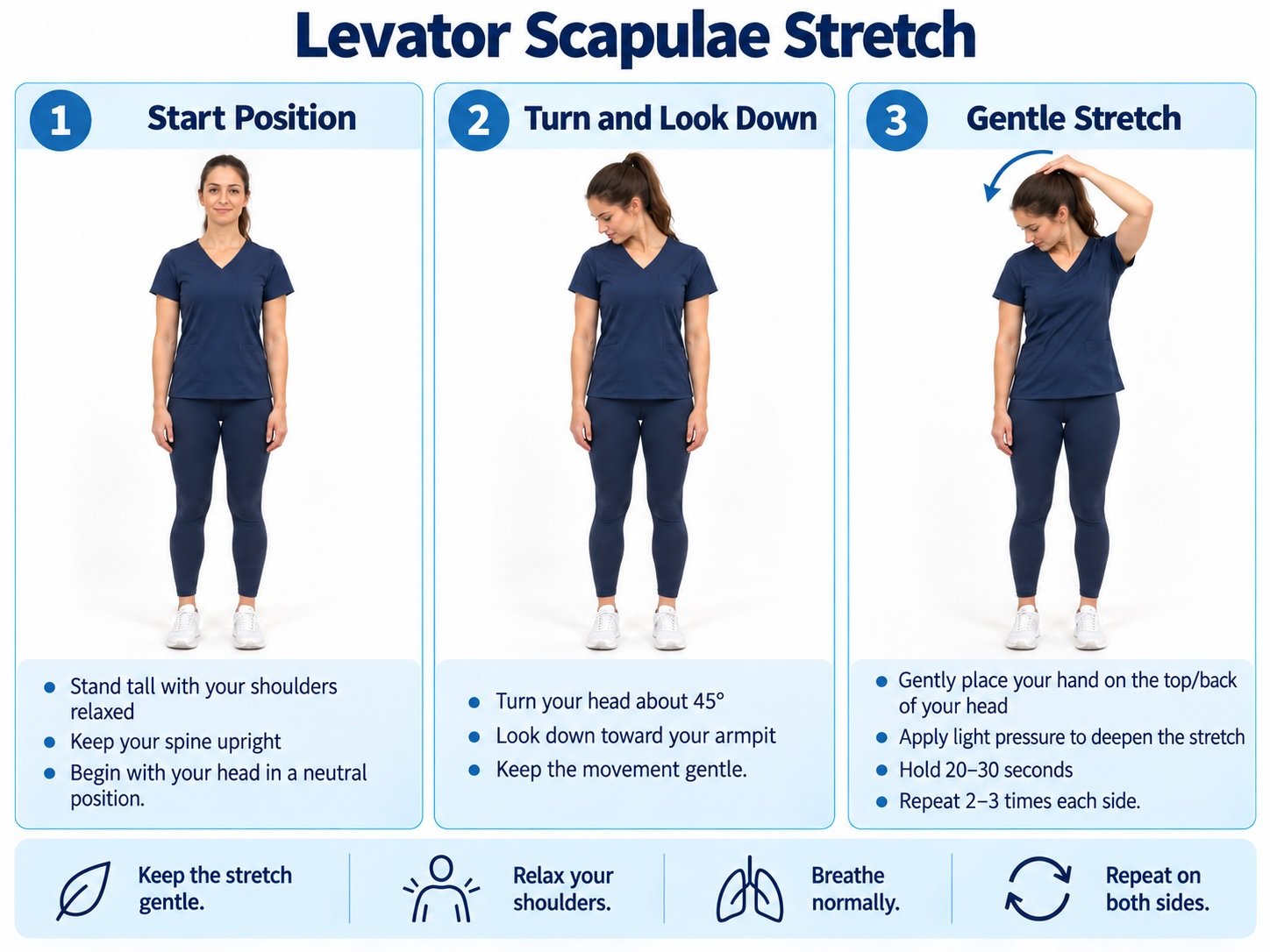
Levator Scapulae Stretch
The Levator Scapulae Stretch is a gentle neck and upper shoulder stretch that targets the levator scapulae muscle along the side and back of the neck. This exercise uses controlled head positioning to encourage comfortable movement and awareness of neck and shoulder tension.
This exercise may help support:
Neck mobility
Upper shoulder flexibility
Postural awareness
Comfortable head and neck movement
Awareness of muscle tension around the neck and shoulder
Movement after prolonged sitting or screen use
Benefits
Supports neck and upper shoulder flexibility
Encourages gentle neck movement
May help improve awareness of tension around the neck and shoulder
Supports comfortable head positioning
Can be performed while standing or seated
Equipment Needed
None
Starting Position
Sit or stand tall with your shoulders relaxed.
Keep your spine upright.
Begin with your head in a neutral position.
Relax your jaw and breathe normally.
Step 1
Turn your head approximately 45 degrees to one side.
Step 2
Gently look down toward your armpit while keeping your shoulders relaxed.
Step 3
Place your hand gently on the top or back of your head and apply light pressure in the same direction of the stretch.
Do not pull forcefully.
Recommended Repetitions
Hold for 20–30 seconds
Repeat 2–3 times on each side
Perform once daily or as recommended by your healthcare provider
Tips
Keep the stretch gentle and controlled.
Relax your shoulders throughout the movement.
Avoid pulling strongly on your head.
Breathe normally during the stretch.
Keep the movement comfortable.
Common Mistakes
Pulling too hard on the head
Shrugging the shoulders
Turning the head too far
Forcing the neck downward
Holding the breath
Moving too quickly
Stop the Exercise If
Stop and consult your healthcare provider if you experience:
Sharp or increasing neck pain
Dizziness
Numbness or tingling
Headache that worsens with the stretch
Unusual weakness or loss of control
Related Conditions & Concerns
This exercise may be included as part of an individualized home-care plan for concerns such as:
Forward head posture
Neck stiffness
Upper shoulder tightness
Postural concerns
Reduced neck mobility
Discomfort associated with prolonged sitting or screen use
Related Services
Need More Help?
If neck stiffness, upper shoulder concerns, or limited movement are affecting your daily activities, an assessment can help identify factors that may be contributing to your symptoms and determine whether Massage Therapy, Osteopathy, or another healthcare approach may be appropriate.
Pelham Massage Therapy & Osteopathy Clinic Inc.
Disclaimer
This exercise is intended for general educational purposes only and should not replace professional medical advice, diagnosis, or treatment. Stop the exercise if you experience significant pain or worsening symptoms, and consult your healthcare provider if you are unsure whether this exercise is appropriate for you.