What Does an Osteopathic Manual Practitioner Do?
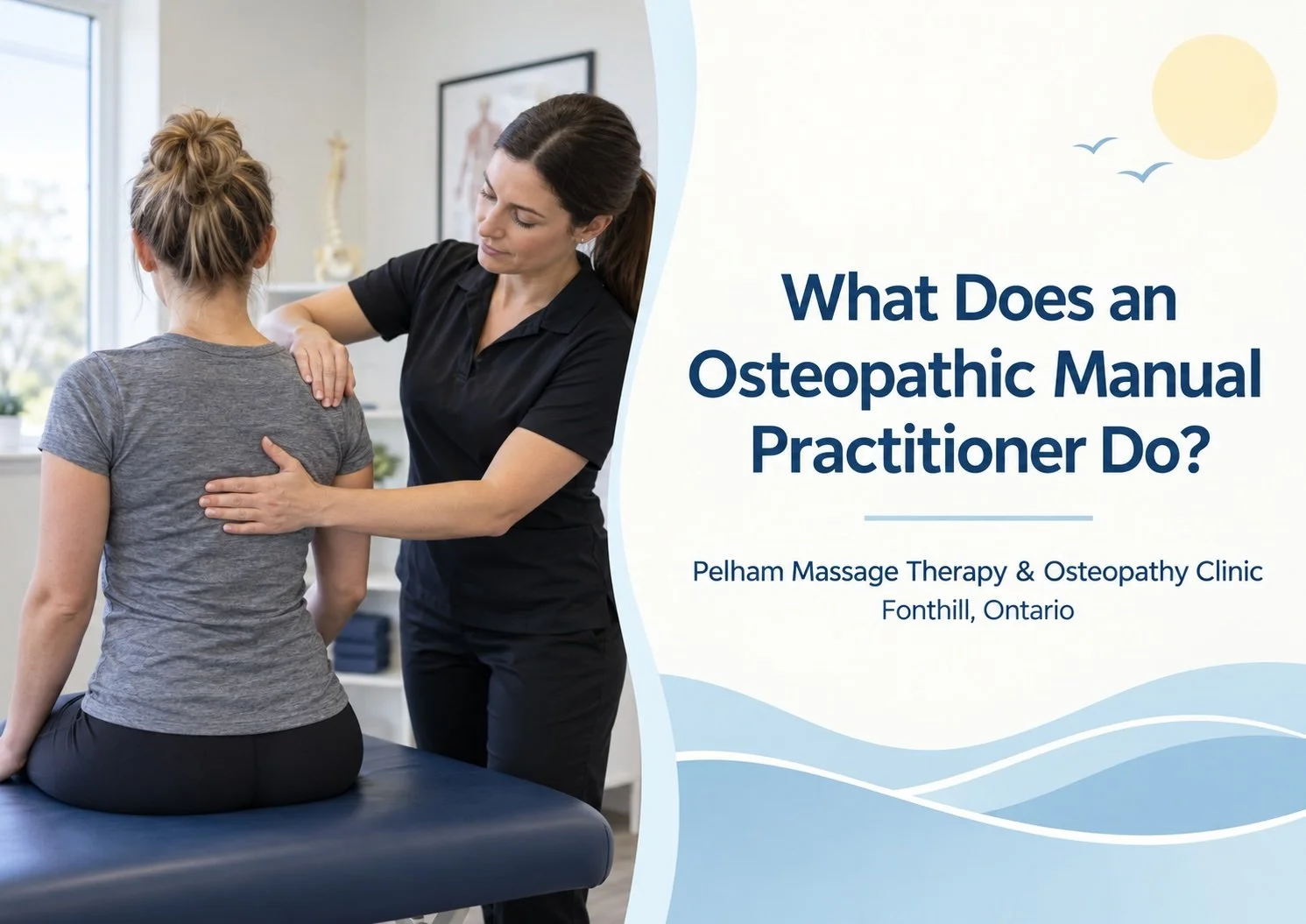
If you’ve heard about osteopathy but aren’t quite sure what an osteopathic manual practitioner does, you’re not alone. Many people are curious about how osteopathy works, what happens during an appointment, and what types of concerns may bring someone in for treatment.
At Pelham Massage Therapy & Osteopathy Clinic in Fonthill, Ontario, we provide individualized osteopathic care for people in Fonthill, Pelham, Welland, St. Catharines, Niagara Falls, Thorold, Port Colborne, Fenwick, Smithville, and throughout the Niagara Region.
Osteopathy takes a whole-body approach, looking beyond the area where you feel discomfort to consider how different parts of the body move and function together.
What Is Osteopathy?
Osteopathy is a form of hands-on manual therapy that considers the body as an interconnected system.
An osteopathic manual practitioner assesses areas such as joints, muscles, connective tissues, posture, and movement to identify restrictions that may be influencing how comfortably and efficiently your body moves.
Treatment is individualized based on your assessment, health history, symptoms, and goals.
What Does an Osteopathic Manual Practitioner Do?
An osteopathic manual practitioner uses hands-on assessment and treatment to evaluate mobility and function throughout the body.
Rather than focusing only on the area where symptoms are felt, the practitioner may assess other areas that could be contributing to the way you move or feel.
For example, someone experiencing shoulder discomfort may also have their neck, upper back, ribs, posture, and overall movement assessed.
The goal is to understand how different areas of the body are functioning together and develop an individualized treatment approach based on the assessment findings.
What Happens During an Osteopathy Assessment?
Your first appointment begins with a discussion about your current concerns, health history, previous injuries, daily activities, and treatment goals.
Your osteopathic manual practitioner may assess:
Posture and movement
Joint mobility
Range of motion
Muscle and tissue tension
Movement patterns
Areas of restriction
Differences between sides of the body
How different regions of the body move together
Your assessment helps guide your treatment plan.
What Techniques May Be Used?
Osteopathic treatment is hands-on and may include a variety of manual techniques depending on your individual needs.
Treatment may involve:
Gentle joint mobilization
Soft tissue techniques
Stretching
Muscle energy techniques
Myofascial techniques
Gentle techniques intended to support mobility and address areas of restriction
Treatment should be adapted to your comfort level and individual presentation.
What Do People See an Osteopathic Manual Practitioner For?
People seek osteopathic care for many different musculoskeletal concerns.
These may include:
Lower back discomfort
Neck and shoulder tension
Hip discomfort
Knee discomfort
Joint stiffness
Restricted mobility
Postural strain
Muscle tension
Headaches associated with musculoskeletal tension
Discomfort related to repetitive activities
Changes in mobility or movement
Because symptoms can have many different causes, an individual assessment is important.
How Osteopathic Treatment May Help
Depending on your individual presentation, osteopathic treatment may help:
Improve joint mobility
Reduce muscle and tissue tension
Improve range of motion
Address areas of restriction
Support more comfortable movement
Support mobility and function
Support more comfortable movement when musculoskeletal tension or restriction is present
Treatment plans are individualized according to your assessment, needs, and goals.
What to Expect During Your Appointment
Your osteopathic manual practitioner will begin by discussing your concerns and completing an assessment.
Treatment is then based on the findings of that assessment.
Because osteopathy considers how different areas of the body interact, treatment may not be limited to the exact location where you are experiencing symptoms.
Your practitioner should explain what they are assessing and treating and give you an opportunity to ask questions throughout your appointment.
What Should You Wear to an Osteopathy Appointment?
Comfortable clothing that allows you to move easily is usually best.
Consider wearing:
Athletic pants or leggings
Shorts
A comfortable T-shirt or tank top
Clothing that allows your practitioner to assess movement easily
If you are unsure what to wear, you can contact the clinic before your appointment.
Is Osteopathy Painful?
Osteopathic treatment is generally gentle and should be adapted to your comfort level.
Some areas may already feel tender or sensitive when you arrive. Communication with your practitioner is important, so let them know if a technique feels uncomfortable or if you have any concerns during treatment.
When Should You Seek Medical Attention?
Osteopathy is not a substitute for appropriate medical assessment.
Seek prompt medical attention for symptoms such as:
Sudden or severe unexplained pain
Significant or progressive weakness
New loss of bowel or bladder control
Numbness in the groin or saddle area
Severe pain following a significant injury
Chest pain or difficulty breathing
Sudden neurological symptoms
Fever or other signs of illness accompanying significant pain
If you are unsure whether osteopathic treatment is appropriate for a particular health concern, speak with your physician or another qualified healthcare provider.
Related Conditions
Osteopathic care may be considered by people experiencing concerns such as:
Lower back pain
Sciatica
Neck and shoulder discomfort
Frozen shoulder
Hip pain
Knee pain
Headaches
Muscle tension
Joint stiffness
Postural strain
Related Services
Need More Help?
If pain, stiffness, or restricted movement is interfering with your daily activities, osteopathic care may be one option to consider.
At Pelham Massage Therapy & Osteopathy Clinic, osteopathic treatment is individualized based on your assessment, concerns, and goals.
Book your osteopathy appointment online to get started.
Connect With Us
🌐 Website
📞 Call Us: 289-501-4229
Pelham Massage Therapy & Osteopathy Clinic
1440 Pelham Street, Fonthill, Ontario
Serving Pelham, Welland and the Niagara Region
Disclaimer
This blog is intended for educational purposes only and should not be considered medical advice. Osteopathic manual therapy is not a substitute for medical diagnosis or treatment. Always consult your physician or qualified healthcare provider regarding persistent, worsening, severe, or unexplained symptoms.
Published by Pelham Massage Therapy & Osteopathy Clinic Inc.