Carpal Tunnel Syndrome & Massage Therapy: What to Know
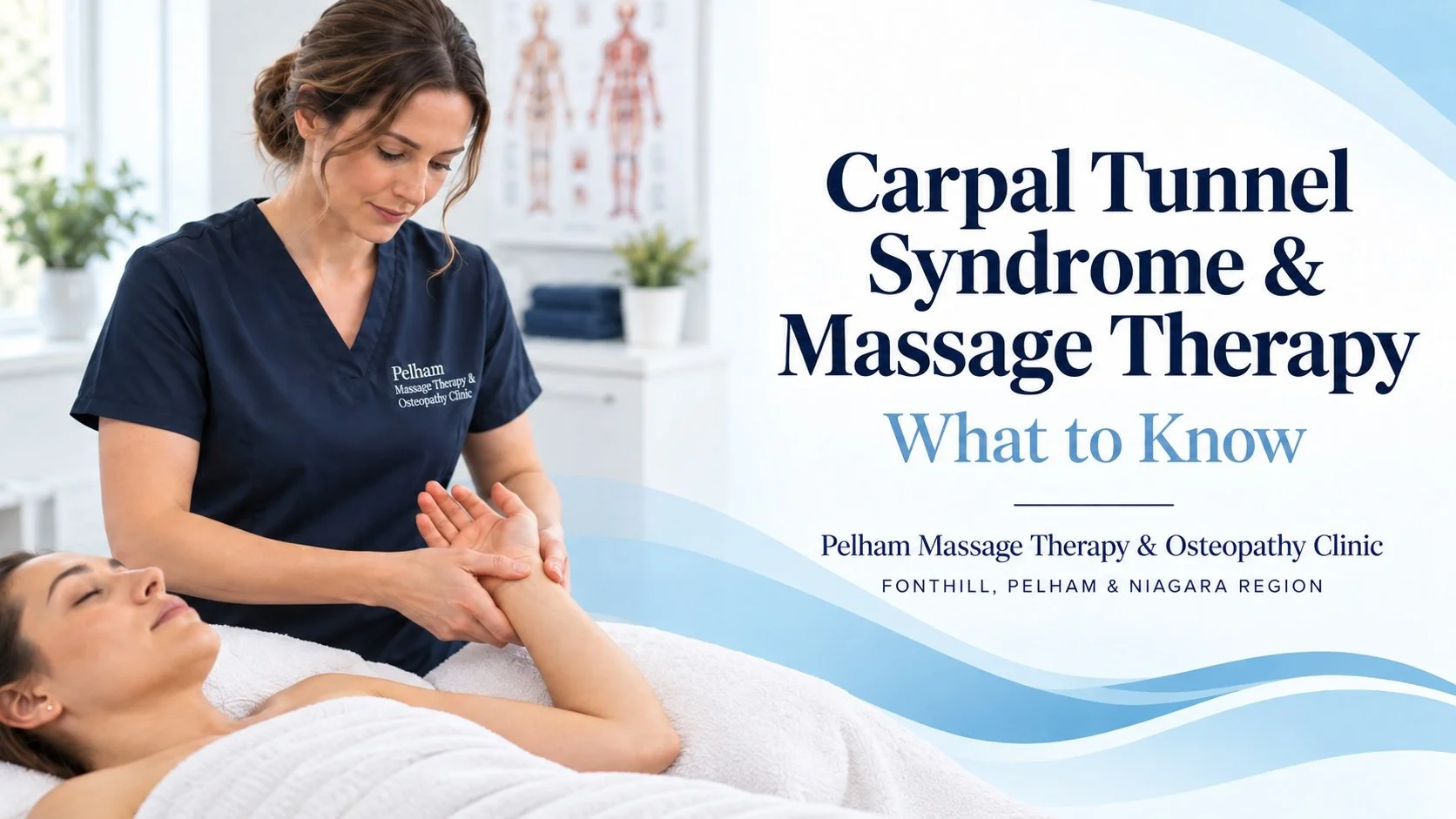
Numbness, tingling, discomfort, or weakness in the hand can make everyday activities such as typing, driving, gardening, or gripping objects more difficult.
Carpal tunnel syndrome is one possible cause of these symptoms, but similar symptoms can occur for other reasons as well.
At Pelham Massage Therapy & Osteopathy Clinic, Registered Massage Therapy may be used to address muscle tension and soft-tissue discomfort in the forearm, wrist, hand, shoulder, or neck when appropriate.
What Is Carpal Tunnel Syndrome?
Carpal tunnel syndrome occurs when the median nerve becomes compressed as it passes through the carpal tunnel at the wrist.
Symptoms may include:
Numbness or tingling in the thumb, index finger, middle finger, and part of the ring finger
Wrist or hand discomfort
Reduced grip strength
Dropping objects
Symptoms that may be more noticeable at night
Discomfort that may extend into the forearm
Because numbness, tingling, and weakness can have different causes, persistent or worsening symptoms should be assessed by an appropriate healthcare professional.
How May Massage Therapy Be Used?
Massage Therapy does not remove structural compression of the median nerve or cure carpal tunnel syndrome.
A Registered Massage Therapist may instead assess and treat surrounding muscles and soft tissues based on your individual presentation.
Treatment may focus on areas such as:
Forearm muscle tension
Wrist and hand soft tissues
Upper-arm tension
Shoulder and neck tension
Comfortable movement
Relaxation
Treatment is individualized according to your health history, current concerns, assessment findings, comfort level, and goals.
What May Contribute to Carpal Tunnel Syndrome?
Factors associated with carpal tunnel syndrome may include:
Repetitive hand or wrist movements
Prolonged computer or keyboard use
Work involving repeated gripping
Power-tool use
Pregnancy-related changes
Previous wrist injuries
Certain medical conditions
Not everyone with wrist or hand symptoms has carpal tunnel syndrome.
What to Expect During a Massage Therapy Appointment
Your Registered Massage Therapist may ask about:
Where you feel symptoms
When symptoms began
Activities that aggravate or ease them
Work and recreational activities
Previous injuries
Relevant health history
Your treatment goals
Treatment may include manual techniques to areas of muscle tension or soft-tissue discomfort around the forearm, wrist, hand, shoulder, or neck.
Pressure and positioning should always be adapted to your comfort.
General Self-Care Considerations
Depending on your situation, general strategies may include:
Taking regular breaks from repetitive tasks
Adjusting workstation ergonomics
Changing hand or wrist positions regularly
Avoiding prolonged gripping when possible
Following exercises or brace recommendations provided by an appropriate healthcare professional
When to Seek Medical Assessment
Seek medical assessment if you experience:
Persistent numbness
Increasing weakness
Difficulty gripping objects
Loss of sensation
Symptoms that continue to worsen
Sudden or unexplained neurological changes
Massage Therapy may be used alongside medical or rehabilitation care when appropriate.
Can Massage Therapy Cure Carpal Tunnel Syndrome?
No.
Massage Therapy does not cure carpal tunnel syndrome or remove structural nerve compression.
It may be used to address surrounding muscle tension or soft-tissue discomfort based on an individual assessment.
How Many Treatments Will I Need?
There is no standard number of Massage Therapy appointments for carpal tunnel-related concerns.
Treatment frequency should depend on your individual symptoms, assessment findings, goals, and response to care.
Massage Therapy for Wrist and Forearm Discomfort in Fonthill, Pelham & Niagara Region
At Pelham Massage Therapy & Osteopathy Clinic, our Registered Massage Therapists provide individualized Massage Therapy based on each client’s health history, current concerns, assessment findings, and goals.
We welcome clients from Fonthill, Pelham, Welland, Thorold, St. Catharines, Niagara Falls, Fenwick, Port Colborne, Smithville, Niagara-on-the-Lake, and throughout the Niagara Region.
If you are experiencing wrist, hand, or forearm tension or discomfort, a Registered Massage Therapist can assess whether Massage Therapy may be appropriate for you.
Related Services
Connect With Us
🌐 Website
📞 Call Us: 289-501-4229
We care. Your health is our priority!
Marjorie Dickson, RMT