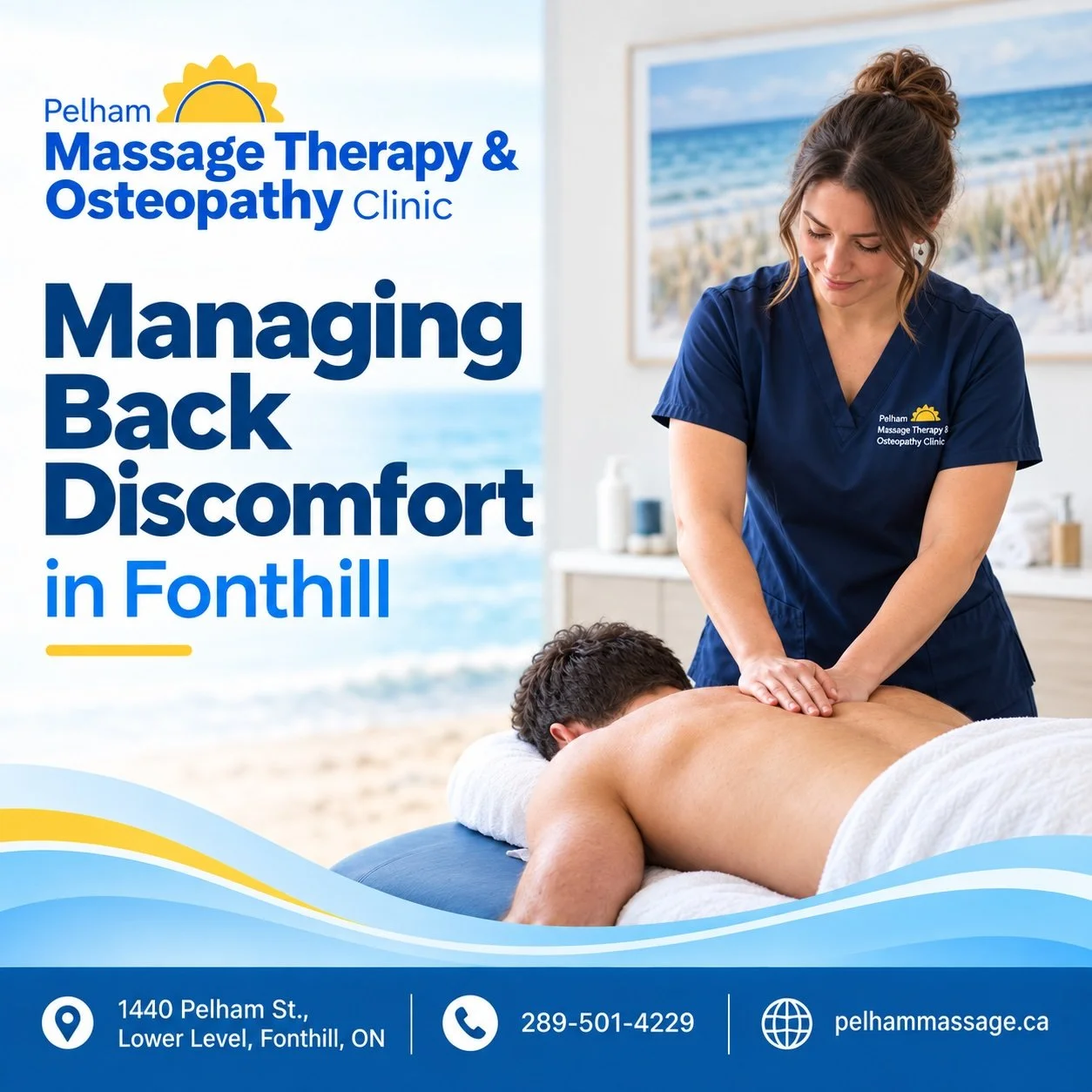
Back pain is one of the most common health concerns affecting adults across the Niagara Region. Whether you spend long hours sitting at a desk, work a physically demanding job, or deal with daily stress and muscle tension, back discomfort can interfere with movement, sleep, and overall comfort.
At Pelham Massage Therapy & Osteopathy Clinic, many clients incorporate massage therapy into their routine to help manage discomfort, support movement, and improve overall wellness.
If you are looking for massage therapy options in Pelham, Fonthill, Welland, or the Niagara Region, manual therapy may be a helpful addition to your care plan.
What Contributes to Back Pain?
Back discomfort can develop from a variety of factors, including:
Prolonged sitting or posture habits
Muscle strain and overuse
Sports-related stress
Stress and muscle tension
Repetitive movements
Pregnancy-related discomfort
Joint stiffness and inactivity
For many Niagara residents, daily activities like commuting, office work, construction, lifting, or gardening can contribute to ongoing tension in the neck, shoulders, and lower back.
How Massage Therapy May Help with Back Discomfort
Massage therapy focuses on soft-tissue structures to address tight muscles, support circulation, and encourage relaxation.
1. Helps Ease Muscle Tension
Tight muscles are a common contributor to lower and upper back discomfort. Registered Massage Therapy helps release restricted muscles and fascia, supporting flexibility and ease of movement.
This can help address:
Muscle spasms and tightness
Stiffness after activity or resting
Limited range of motion related to tissue tension
2. Supports Circulation and Tissue Recovery
Massage therapy encourages local circulation to tight or overworked areas of the body. Improved blood flow delivers oxygen and nutrients to tissues while supporting the body's natural recovery process following:
Work-related strain
General back tension
Repetitive stress from daily activities
3. Helps Manage Stress-Related Tension
Stress often causes people to unconsciously hold tension in the neck, shoulders, and lower back. Over time, this physical stress can lead to ongoing discomfort.
Massage therapy promotes relaxation and helps calm the nervous system, allowing clients to experience a quiet break from daily physical and mental stress.
4. Supports Postural Comfort
Prolonged sitting at desks, driving, or looking down at screens can place extra demand on the upper and lower back.
Massage therapy can help:
Release tension in chest, shoulder, and hip muscles
Support comfortable posture habits
Address tension headaches related to neck tightness
Promote overall posture awareness
5. Addresses Tension Related to Sciatica & Nerve Irritation
When muscle tension in the lower back or gluteal region places pressure on surrounding tissues, it can contribute to leg and hip discomfort.
Massage therapy may help reduce surrounding muscle tightness and support hip and lower back mobility, helping improve comfort for people experiencing:
Gluteal and hip tightness
Piriformis tension
Lower back stiffness
Benefits of Regular Massage Therapy
Many clients notice general wellness benefits alongside soft-tissue care, such as:
Improved feelings of relaxation and better sleep quality
Enhanced flexibility and ease of movement
Support for active lifestyles and athletic recovery
Better overall daily comfort
Related Services
Connect with us
🌐 Website
📅 Book Online
📞 Call Us: 289-501-4229
📍 Find Us on Google Maps
📘 Follow Us on Facebook
📸 Follow Us on Instagram
Tailored to Your Goals
Whether you are managing daily tension, recovering from an active weekend, or looking to support your mobility, treatments at Pelham Massage Therapy & Osteopathy Clinic are tailored to your needs. Your therapist will complete an assessment to adapt techniques to your comfort level.
Marjorie Dickson, RMT