Hip Imbalances and Osteopathy: How Your Pelvis Can Affect the Way You Move
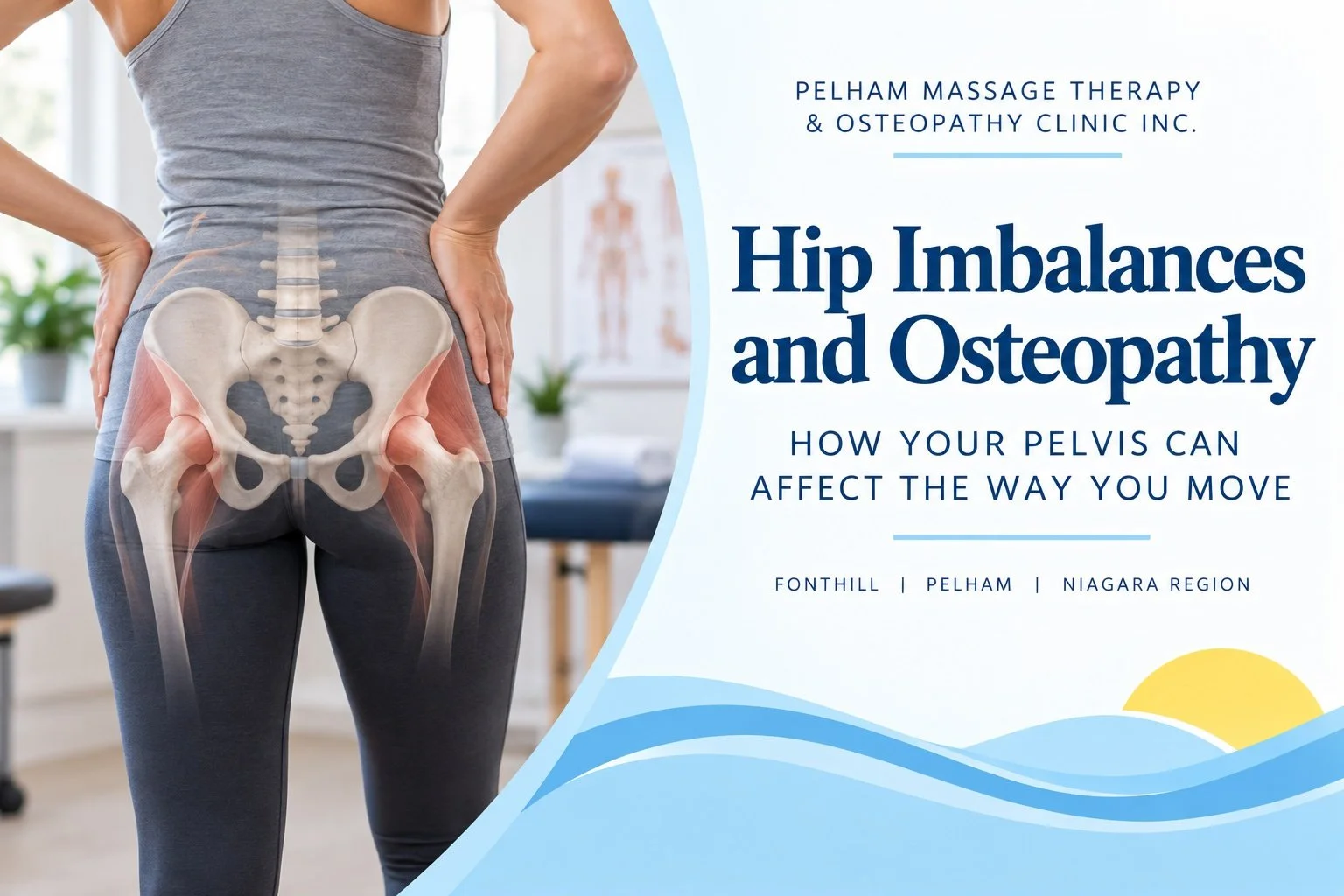
Your hips and pelvis are involved in many everyday movements — from walking and standing to bending, climbing stairs, exercising, and changing positions throughout the day.
When the muscles and joints surrounding the hips and pelvis feel stiff or are moving differently from side to side, you may begin to notice changes in how movement feels.
You might feel as though one hip is tighter than the other, one side moves differently, or certain movements feel less comfortable. Some people may also experience discomfort through the hips, pelvis, or lower back.
What Do People Mean by a “Hip Imbalance”?
The term “hip imbalance” is commonly used to describe differences in how the hips or pelvis feel or move. It does not necessarily mean that the pelvis is permanently misaligned or that something is “out of place.”
Movement through the hips and pelvis can be influenced by many factors, including:
Muscle tension
Joint mobility
Posture and working positions
Previous injuries
Repetitive activities
Exercise and activity levels
Individual movement patterns
Rather than focusing only on whether the hips appear perfectly level, an osteopathic assessment considers how the pelvis, spine, hips, and surrounding areas are moving and functioning together.
How Are the Hips and Pelvis Involved in Movement?
The hips and pelvis connect the upper and lower portions of the body and are involved in transferring movement during activities such as walking, standing, bending, and exercising.
Differences in mobility or muscular tension around this area may be associated with:
Hip or groin discomfort
Lower-back tension
Tightness through the gluteal muscles
Changes in comfortable movement
Knee discomfort
Reduced hip mobility
Stiffness through the pelvis or lower back
Because symptoms can have many different causes, an individual assessment is important rather than assuming that one particular structure or area is responsible.
How May Osteopathy Help?
Osteopathic manual treatment is a hands-on approach that may be used to address mobility, muscular tension, and areas of restriction.
Your osteopathic manual practitioner may assess areas such as the pelvis, hips, spine, surrounding muscles, connective tissues, and other regions based on your individual presentation.
Treatment may focus on:
Supporting Mobility
Areas of reduced mobility may make certain movements feel stiff or uncomfortable. Manual techniques may be used to support comfortable joint and tissue movement.
Addressing Muscular Tension
Muscles around the hips, pelvis, gluteal region, and lower back may develop tension related to activity, posture, repetitive movement, or other factors.
Supporting Comfortable Movement
Treatment may be directed toward areas of restriction or tension with the goal of supporting mobility and comfortable movement.
Assessing More Than One Area
The location where discomfort is felt is not always the only area worth assessing. An osteopathic assessment may include surrounding and related regions to better understand how different areas are moving together.
What Happens During an Osteopathic Assessment?
Your first appointment begins with a discussion of your health history, current concerns, activities, and treatment goals.
Your osteopathic manual practitioner may then assess:
Posture and movement
Hip mobility
Pelvic and spinal movement
Range of motion
Muscle and tissue tension
Differences in movement between sides
Treatment is individualized according to your assessment findings, comfort level, needs, and goals.
Experiencing Hip or Pelvic Discomfort?
If your hips feel tight, restricted, or uncomfortable, an osteopathic assessment may help identify areas of reduced mobility or tension that may be relevant to your movement.
Osteopathic treatment at Pelham Massage Therapy & Osteopathy Clinic in Fonthill is individualized according to your assessment and goals.
Related Services
Connect With Us
🌐 Website
📞 Call Us: 289-501-4229
Disclaimer
This article is intended for general educational purposes only and should not be considered medical advice. Osteopathic manual therapy is not a substitute for medical diagnosis or treatment. Consult an appropriate healthcare professional regarding persistent, worsening, severe, or unexplained symptoms.
We Care – Your Health Is Our Priority.
Published by Pelham Massage Therapy & Osteopathy Clinic Inc.