How Can Osteopathy Help With Sciatica?
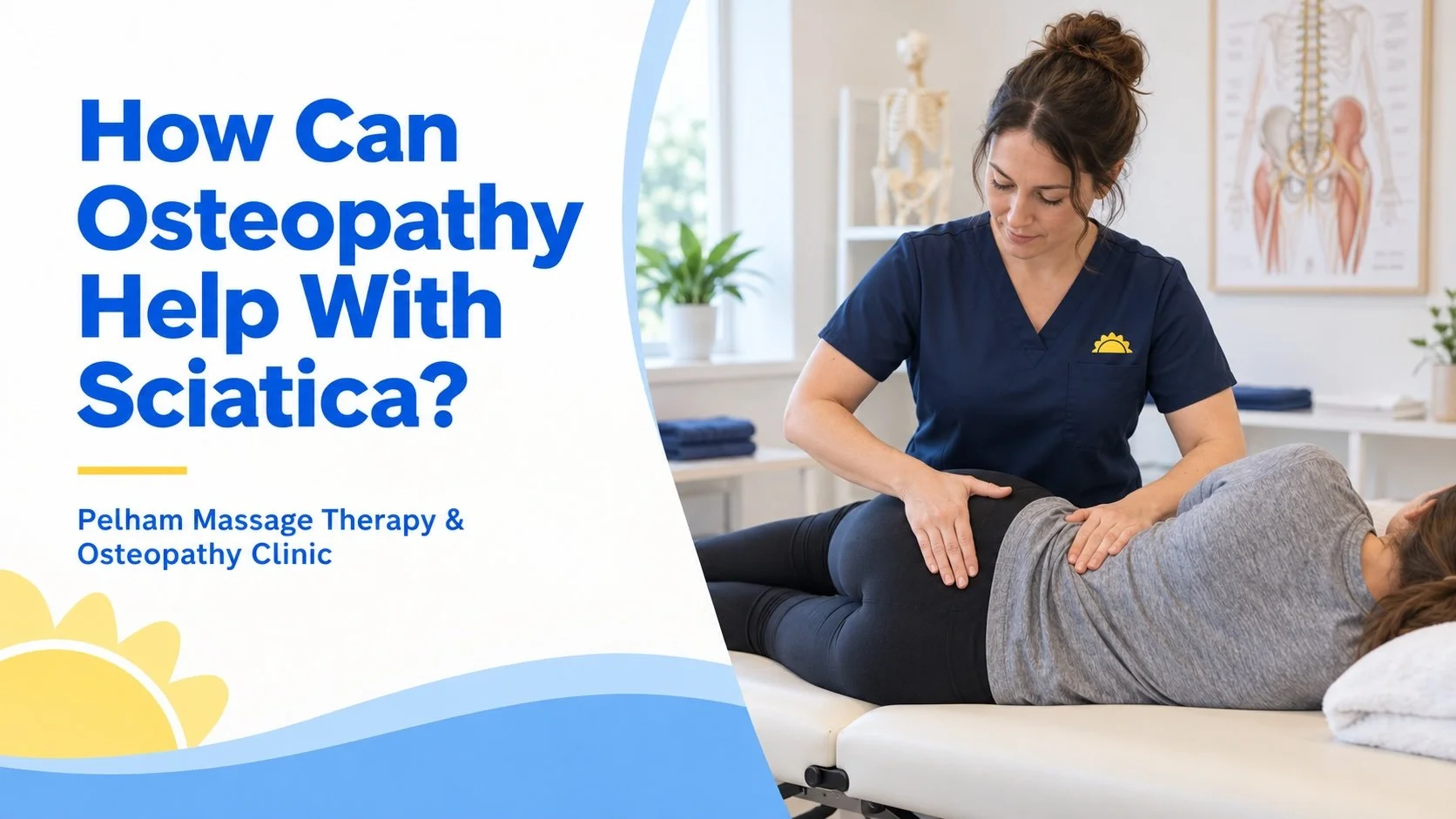
Pelham Massage Therapy & Osteopathy Clinic | Osteopathy in Fonthill, Pelham
Sciatica is a term commonly used to describe symptoms that travel from the lower back or buttock into the leg. These symptoms may include pain, tingling, numbness, burning, or changes in sensation.
At Pelham Massage Therapy & Osteopathy Clinic in Fonthill, manual osteopathy provides a hands-on approach to assessing mobility, movement, and areas of tension that may be associated with lower-back and leg symptoms.
We serve clients from Pelham, Welland, Thorold, St. Catharines, Niagara Falls, Niagara-on-the-Lake, Port Colborne, and surrounding Niagara Region communities.
What Is Sciatica?
Sciatica commonly refers to symptoms associated with irritation or involvement of the sciatic nerve or the nerve roots that contribute to it.
The sciatic nerve travels from the lower back through the pelvis and buttock and continues down the leg.
Symptoms may include:
Lower-back discomfort
Pain travelling into the buttock or leg
Tingling
Numbness
Burning sensations
Changes in sensation
Weakness in the leg or foot
Symptoms can vary considerably from person to person.
What Can Cause Sciatica-Like Symptoms?
Symptoms that resemble sciatica may have different causes.
These can include:
Disc-related irritation
Changes in the lumbar spine
Muscle or soft-tissue tension
Joint restrictions
Pregnancy-related changes
Repetitive activity
Prolonged sitting
Previous injuries
Because several conditions can produce similar symptoms, an appropriate assessment is important.
Osteopathy and Sciatica Symptoms
Manual osteopathy uses hands-on assessment and treatment techniques that focus on mobility, movement, joints, muscles, fascia, and other soft tissues.
During an osteopathic assessment, the practitioner may look at areas such as:
Lumbar spine
Pelvis
Hips
Sacrum
Lower limbs
Walking patterns
Posture
Soft-tissue tension
The goal of the assessment is to understand how different areas of the body are moving and whether any restrictions or movement changes are present.
Lower-Back and Pelvic Mobility
Movement of the lumbar spine and pelvis can influence how a person stands, walks, sits, and moves.
An osteopathic practitioner may assess these areas when a client presents with lower-back or leg symptoms.
Treatment techniques are selected based on the findings of the assessment and the individual’s presentation.
Soft-Tissue Tension
Muscles in the lower back, hips, gluteal region, and legs may become tense or guarded when someone is experiencing discomfort.
Manual osteopathic treatment may include techniques directed toward muscles, fascia, joints, and other soft tissues.
Movement and Posture
Sciatica-like symptoms may sometimes be associated with certain movements, positions, or activities.
An osteopathic assessment may consider:
Sitting posture
Standing posture
Walking
Repetitive movements
Lifting patterns
Work or recreational activities
This information can help the practitioner understand which movements or positions may be relevant to the client’s symptoms.
What to Expect During an Osteopathy Appointment
Your appointment may include:
A health history
Discussion of your symptoms
Review of previous injuries
Postural and movement assessment
Hands-on assessment
Manual osteopathic treatment
Treatment is individualized based on the assessment and the client’s comfort.
Can Massage Therapy Be Used for Similar Symptoms?
Massage Therapy and osteopathy are separate services with different assessment and treatment approaches.
A Registered Massage Therapist may assess and treat muscles and other soft tissues within the scope of Massage Therapy.
Some clients with lower-back, hip, or leg tension may choose Massage Therapy depending on their individual concerns and treatment goals.
When Should You Seek Medical Assessment?
Symptoms involving the lower back and leg should be appropriately assessed, particularly if they are severe, persistent, or worsening.
Seek medical care promptly if you experience:
New or worsening muscle weakness
Loss of bladder or bowel control
Numbness in the groin or saddle area
Severe or rapidly worsening pain
Significant difficulty walking
Symptoms following major trauma
Fever or unexplained illness with severe back pain
These symptoms may require urgent medical evaluation.
Osteopathy in Fonthill, Pelham and Niagara Region
Pelham Massage Therapy & Osteopathy Clinic provides manual osteopathy in Fonthill for clients from:
Pelham
Welland
Thorold
St. Catharines
Niagara Falls
Niagara-on-the-Lake
Port Colborne
Surrounding Niagara Region communities
Related Services
If you are experiencing lower-back or leg symptoms and would like to have your mobility and movement assessed, you can book an osteopathy appointment at our Fonthill clinic.
Pelham Massage Therapy & Osteopathy Clinic
1440 Pelham Street, Fonthill, Ontario
pelhammassage.ca
Published by Pelham Massage Therapy & Osteopathy Clinic Inc.