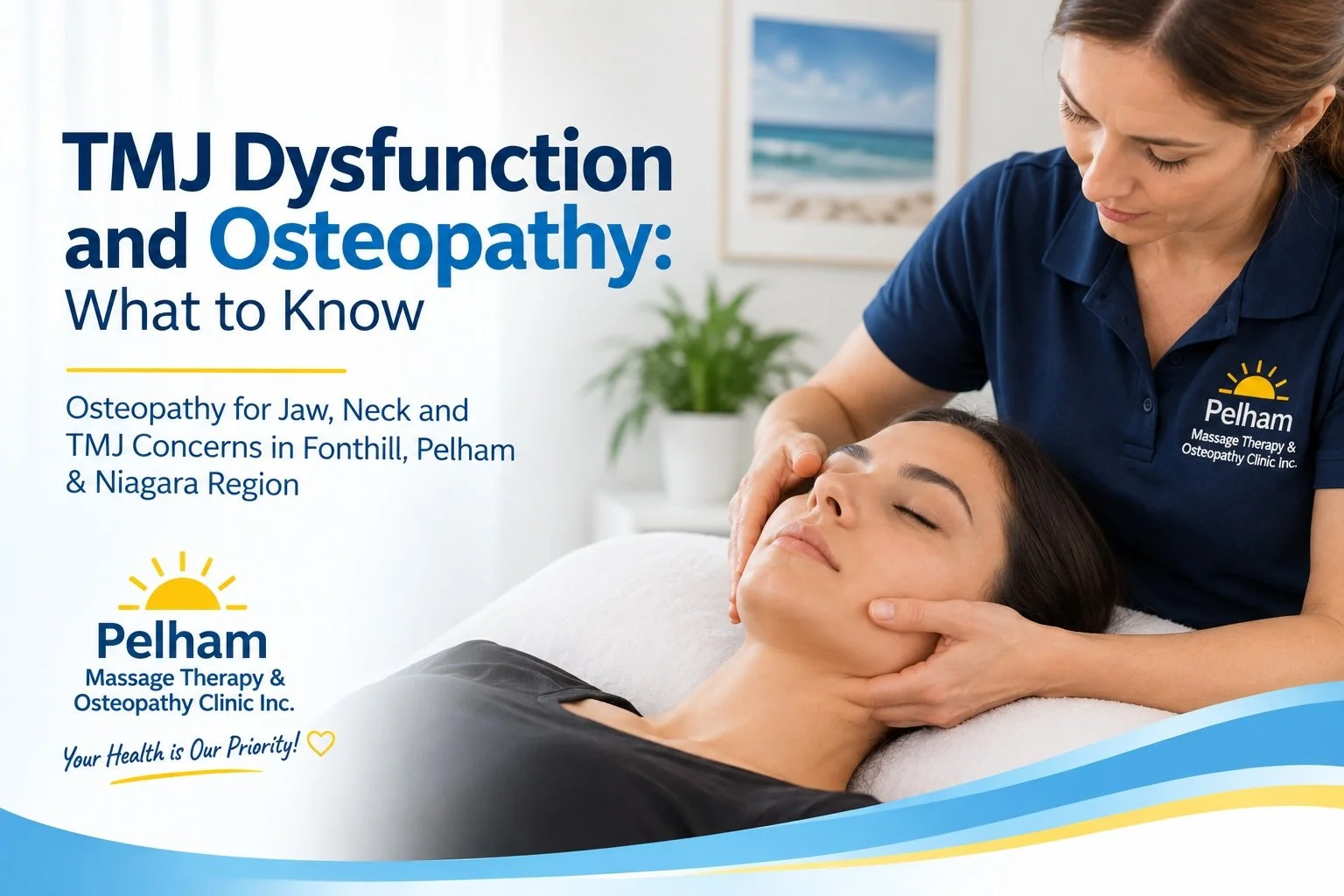
Osteopathy for Jaw, Neck and TMJ Concerns in Fonthill, Pelham & Niagara Region
Jaw clicking, popping, clenching, grinding, stiffness, and discomfort can affect everyday activities such as chewing, speaking, yawning, and sleeping.
At Pelham Massage Therapy & Osteopathy Clinic in Fonthill, manual osteopathy provides a hands-on approach to assessing movement and mobility in areas that may be relevant to jaw-related concerns, including the jaw, neck, upper back, and surrounding soft tissues.
Our clinic serves clients from Fonthill, Pelham, Welland, Thorold, St. Catharines, Niagara Falls, Niagara-on-the-Lake, Port Colborne, and surrounding Niagara Region communities.
What Is the TMJ?
The temporomandibular joints, commonly called the TMJs, are located on either side of the head where the jawbone connects with the skull.
These joints are involved in:
Chewing
Speaking
Yawning
Opening and closing the mouth
Side-to-side jaw movement
The jaw also works together with muscles, ligaments, and other structures of the head and neck.
What Is TMJ Dysfunction?
TMJ dysfunction is a general term used for symptoms involving the jaw joint and surrounding structures.
Symptoms may include:
Jaw pain or tenderness
Clicking or popping
Grinding sensations
Difficulty opening the mouth
Jaw stiffness
Facial tension
Headaches
Neck or shoulder tension
Teeth grinding
Jaw clenching
Changes in how the jaw moves
Symptoms can vary from person to person.
What Can Contribute to TMJ Symptoms?
Jaw-related symptoms may be associated with several factors, including:
Clenching
Teeth grinding
Stress-related muscle tension
Previous jaw or facial injuries
Dental procedures
Changes in neck movement
Posture
Muscle tension around the jaw, face, or neck
Because jaw symptoms can have different causes, appropriate assessment is important.
Osteopathy and TMJ Concerns
Manual osteopathy uses hands-on assessment and treatment techniques that focus on mobility, movement, joints, muscles, fascia, and related soft tissues.
When someone presents with jaw-related concerns, an osteopathic practitioner may assess:
Jaw movement
Neck mobility
Upper-back mobility
Head position
Soft-tissue tension
Posture
Related movement patterns
The goal is to understand how these areas are moving and whether any restrictions or tension patterns are present.
Jaw Mobility
The practitioner may observe how the jaw opens, closes, and moves from side to side.
They may also consider whether movement is symmetrical and whether certain movements reproduce symptoms.
Treatment techniques are selected based on the individual assessment.
Muscle and Soft-Tissue Tension
Muscles around the jaw, face, neck, and shoulders may become tense or guarded.
Manual osteopathic treatment may include techniques directed toward muscles, fascia, joints, and other soft tissues depending on the assessment findings.
Neck and Upper-Back Movement
The jaw does not function completely independently from the rest of the upper body.
An osteopathic assessment may consider:
Cervical spine mobility
Upper-back movement
Shoulder position
Head posture
Related muscular tension
These areas may be relevant when assessing a person with jaw-related concerns.
Posture and Jaw Symptoms
Posture is influenced by many factors, including work habits, screen use, activity level, previous injuries, and individual anatomy.
An osteopathic practitioner may consider posture as one part of the overall assessment rather than treating posture as a single cause of TMJ symptoms.
What to Expect During an Osteopathy Appointment
Your appointment may include:
A health history
Discussion of your jaw symptoms
Review of clenching or grinding
Discussion of previous dental or jaw concerns
Observation of jaw movement
Neck and upper-back assessment
Postural assessment
Hands-on osteopathic treatment
Treatment is individualized based on the assessment and client comfort.
When Should Jaw Symptoms Be Medically or Dentally Assessed?
Jaw symptoms may sometimes require assessment by a dentist, physician, or other healthcare professional.
Seek appropriate care if you experience:
Jaw locking
Significant difficulty opening or closing the mouth
Severe or worsening pain
Facial swelling
Symptoms following trauma
New numbness or weakness
Dental pain
Sudden changes in your bite
Symptoms that are persistent or worsening
Depending on the cause, dental or medical assessment may be more appropriate than manual treatment alone.
Osteopathy in Fonthill, Pelham & Niagara Region
Pelham Massage Therapy & Osteopathy Clinic provides manual osteopathy in Fonthill for clients from:
Pelham
Welland
Thorold
St. Catharines
Niagara Falls
Niagara-on-the-Lake
Port Colborne
Surrounding Niagara Region communities
If you are experiencing jaw stiffness, clicking, clenching, grinding, or changes in jaw movement and would like to have your movement assessed, you can book an osteopathy appointment at our Fonthill clinic.
Related Services
Connect With Us
🌐 Website:https://pelhammassage.ca
📘 Facebook:https://facebook.com/pelhammassage
📸 Instagram:https://instagram.com/pelhammassage
Book Online: https://pelhammassagetherapyosteopathyclinic.janeapp.com/
We care. Your health is our priority!
Published by Pelham Massage Therapy & Osteopathy Clinic Inc.