Band External Rotation
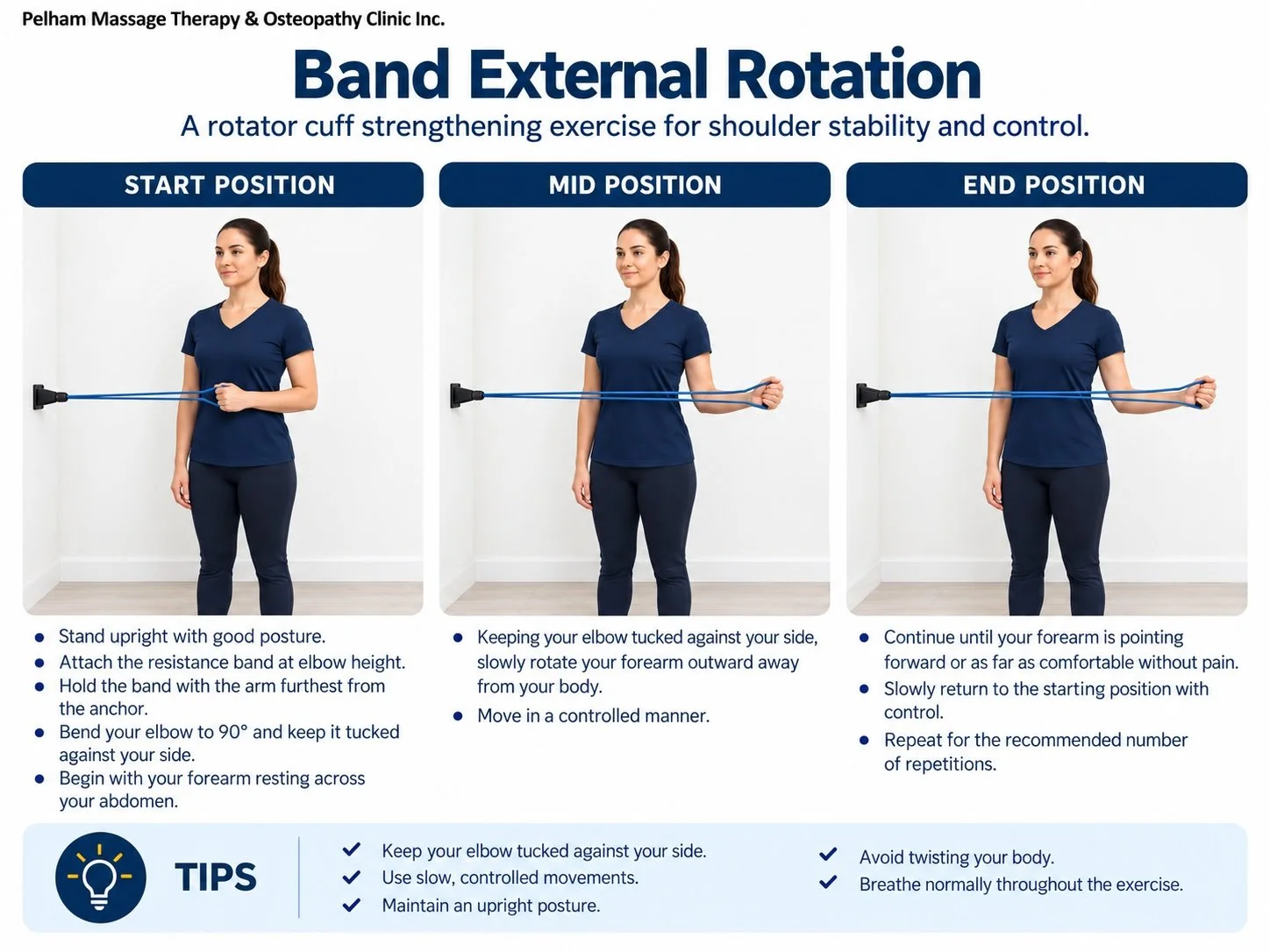
Band External Rotation
The Band External Rotation exercise is a strengthening exercise that targets the rotator cuff muscles, particularly the infraspinatus and teres minor. Using a resistance band can help support shoulder strength, stability, control, and coordinated movement.
What May This Exercise Support?
This exercise may be used as part of an exercise or home-care program for:
Rotator cuff weakness
Shoulder weakness
Shoulder instability
Reduced shoulder control
Shoulder stiffness
Activities that require overhead movement
Potential Benefits
Supports rotator cuff strength
Supports shoulder stability
Encourages shoulder control and coordination
Supports controlled shoulder movement
Helps build strength for everyday and overhead activities
Equipment Needed
Light resistance band
Door anchor or another secure anchor point, if needed
Starting Position
Stand upright with good posture.
Attach the resistance band at elbow height.
Hold the band with the arm furthest from the anchor.
Bend your elbow to 90 degrees and keep it tucked against your side.
Begin with your forearm resting across your abdomen.
Step 1
Keeping your elbow tucked against your side, slowly rotate your forearm outward away from your body.
Step 2
Continue until your forearm is pointing forward or as far as comfortable without pain.
Step 3
Slowly return to the starting position with a controlled movement.
Repeat for the recommended number of repetitions.
Recommended Repetitions
10–15 repetitions
2–3 sets
Perform 3–4 times per week, or as recommended by your healthcare provider
Tips
Keep your elbow tucked firmly against your side.
Use slow, controlled movements.
Maintain an upright posture.
Avoid twisting your trunk.
Breathe normally throughout the exercise.
Common Mistakes
Letting the elbow move away from your side
Using a resistance band that is too strong
Twisting the body instead of moving the shoulder
Shrugging the shoulder
Performing the movement too quickly
Stop the Exercise If
Stop and consult your healthcare provider if you experience:
Sharp shoulder pain
Increasing pain during or after the exercise
Numbness or tingling
Shoulder instability or a feeling that the shoulder is giving way
Related Conditions & Concerns
This exercise may be included as part of an individualized home-care plan for concerns such as:
Rotator cuff weakness
Shoulder weakness
Shoulder instability
Limited shoulder control
Shoulder stiffness
Related Services
Need More Help?
If shoulder discomfort, weakness, or limited movement is affecting your daily activities, a healthcare provider can assess your individual needs and determine whether exercises such as Band External Rotation may be appropriate as part of your care plan.
Pelham Massage Therapy & Osteopathy Clinic Inc.
Disclaimer
This exercise is intended for general educational purposes only and should not replace professional medical advice, diagnosis, or treatment. Stop the exercise if you experience significant pain or worsening symptoms, and consult your healthcare provider if you are unsure whether this exercise is appropriate for you.