Osteopathy, Movement & the Lymphatic System: What to Know
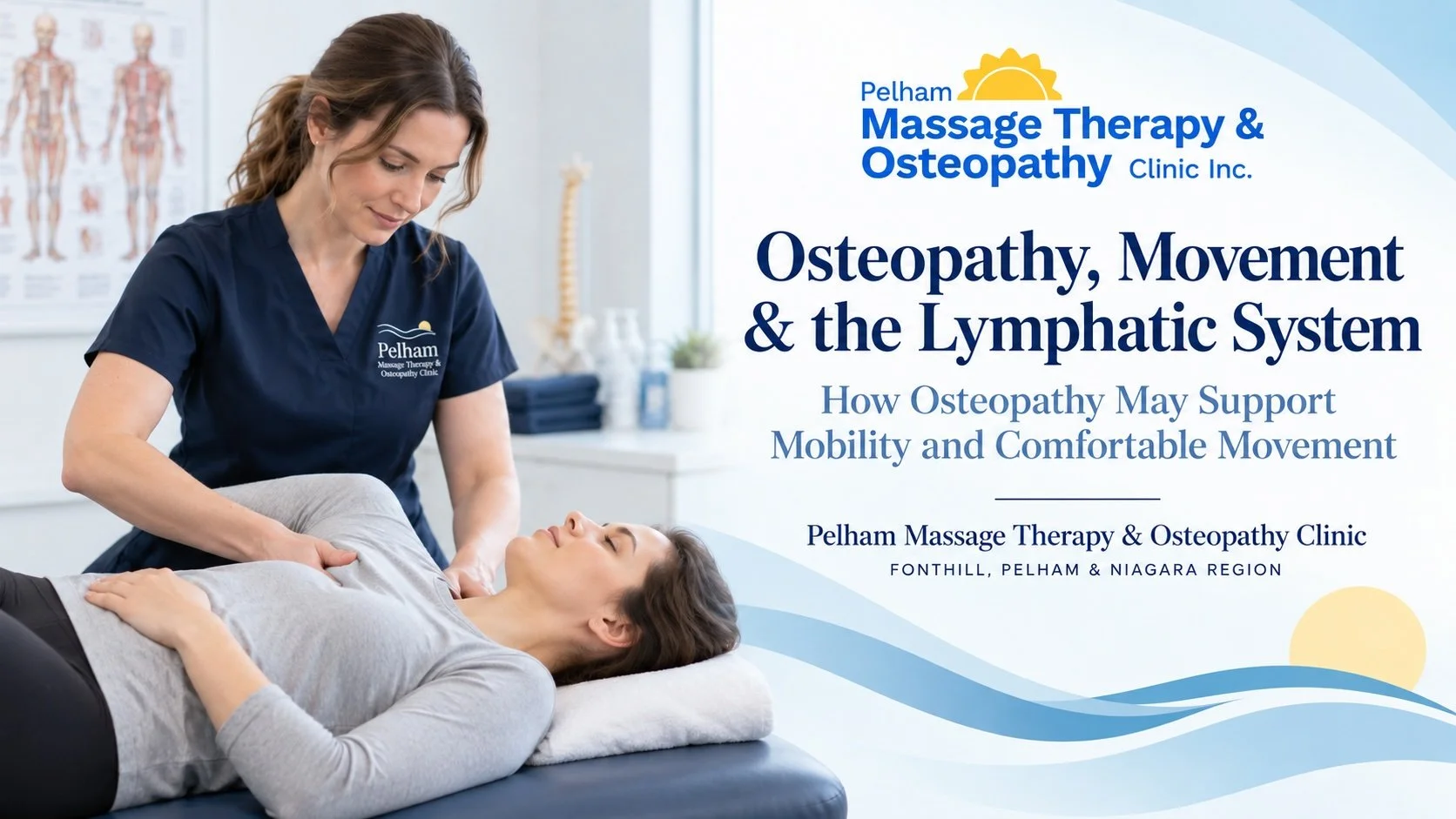
The lymphatic system is an important part of the body’s fluid balance and immune system. Lymph moves through a network of vessels and lymph nodes and is influenced by factors including body movement, muscle activity and breathing.
People sometimes wonder whether osteopathic treatment can play a role in supporting comfortable movement when they are experiencing feelings of stiffness, tension or reduced mobility.
At Pelham Massage Therapy & Osteopathy Clinic, osteopathic treatment is individualized according to each person’s health history, current concerns, assessment findings and goals.
What Is the Lymphatic System?
The lymphatic system is a network of vessels, lymph nodes and organs that helps maintain fluid balance and supports immune function.
Unlike blood circulation, the lymphatic system does not have a central pump like the heart. Movement of lymph is influenced by several normal body processes, including:
Body movement
Muscle contractions
Breathing
Changes in pressure within the chest and abdomen
Swelling can have many different causes. New, unexplained, persistent or significant swelling should be assessed by an appropriate healthcare professional.
How Does Osteopathy Relate to Movement and Mobility?
Osteopathic Manual Practitioners use hands-on assessment and treatment to address mobility and function within the musculoskeletal system.
Treatment may focus on areas such as joints, muscles and connective tissues when restrictions or tension are identified during assessment.
Breathing and Rib-Cage Mobility
Breathing naturally creates changes in pressure within the chest and abdomen.
Where appropriate, osteopathic treatment may address mobility of the rib cage, thoracic region and surrounding tissues as part of an individualized treatment plan.
Joint and Tissue Mobility
Muscle tension, stiffness and reduced joint mobility can affect how comfortable a person feels during everyday movement.
Osteopathic treatment may use gentle manual techniques to address areas of restriction identified during assessment.
Comfortable Movement
Improving or maintaining comfortable movement may be one goal of osteopathic care.
Treatment is based on the individual rather than on a specific claim that osteopathy directly drains lymphatic fluid.
Why Might Someone Seek Osteopathic Treatment?
People may choose osteopathic care for concerns such as:
Muscle tension
Joint stiffness
Reduced mobility
Movement-related discomfort
General musculoskeletal wellness
If swelling, fluid retention or another medical concern is present, osteopathic care should not replace appropriate medical assessment or treatment.
People who have recently undergone surgery should follow the recommendations of their surgeon or healthcare team before receiving manual treatment.
Osteopathy as Part of Overall Wellness
Osteopathy takes an individualized approach to musculoskeletal assessment and treatment.
A person’s treatment plan may consider posture, mobility, movement patterns, areas of tension and other factors relevant to their presenting concerns.
Osteopathic treatment does not replace medical care for lymphatic disorders, lymphedema or unexplained swelling.
Osteopathy in Fonthill, Pelham & Niagara Region
At Pelham Massage Therapy & Osteopathy Clinic, osteopathic treatment is provided based on the individual’s health history, assessment findings and treatment goals.
We welcome clients from Fonthill, Pelham, Welland, Thorold, St. Catharines, Niagara Falls, Fenwick, Port Colborne and surrounding communities throughout the Niagara Region.
Related Services
Connect with us
🌐 Website
📞 Call Us: 289-501-4229
We care! Your health is our Priority!
Published by Pelham Massage Therapy & Osteopathy Clinic