Frozen Shoulder & Osteopathy: What to Know
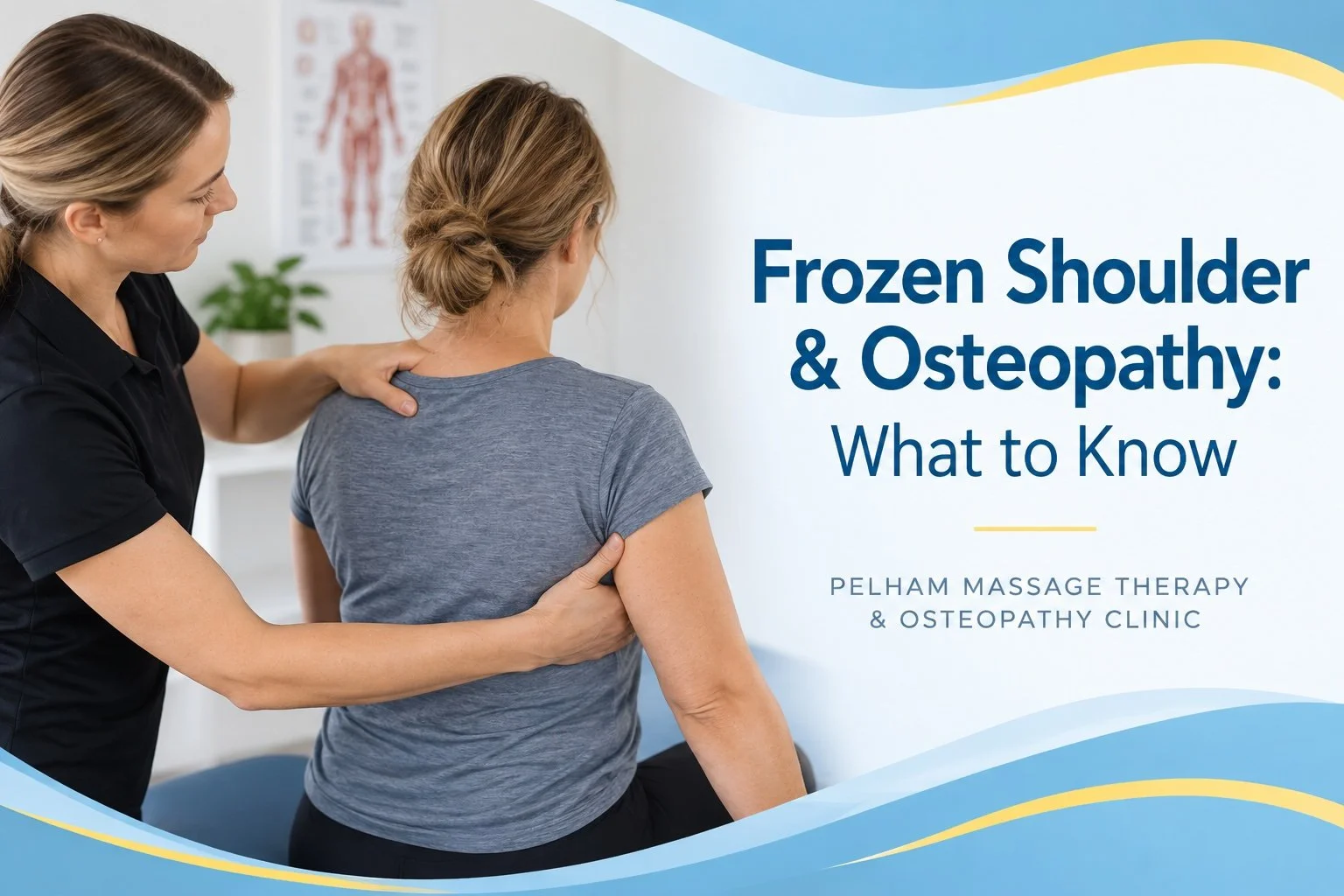
Shoulder stiffness can make everyday activities such as reaching overhead, putting on a jacket, fastening a seatbelt, or sleeping comfortably more difficult.
Frozen shoulder, also known as adhesive capsulitis, is a condition that can cause pain and progressive restriction of shoulder movement over time.
At Pelham Massage Therapy & Osteopathy Clinic in Fonthill, osteopathic treatment may be considered as part of an individualized approach to musculoskeletal care when shoulder stiffness or movement-related discomfort is present.
What Is Frozen Shoulder?
Frozen shoulder, or adhesive capsulitis, affects the capsule surrounding the shoulder joint.
The condition is associated with increasing stiffness and reduced range of motion and may develop gradually over time.
Symptoms and progression can vary from person to person.
Common Signs and Symptoms
People with frozen shoulder may experience:
Pain with reaching movements
Difficulty reaching behind the back
Trouble dressing
Discomfort when washing or brushing the hair
Nighttime shoulder discomfort
Increasing stiffness
Reduced range of motion
A healthcare professional should assess persistent or significant shoulder symptoms to determine the cause.
Who May Be More Likely to Develop Frozen Shoulder?
Frozen shoulder is more commonly seen in:
Adults in midlife
People with diabetes
People who have experienced prolonged shoulder immobility
Individuals recovering from certain shoulder injuries or surgery
In some cases, frozen shoulder may develop without a clear cause.
The Stages of Frozen Shoulder
Frozen shoulder is often described as progressing through three general stages.
Freezing Stage
Pain and stiffness may gradually increase while shoulder movement becomes more limited.
Frozen Stage
Pain may become less prominent for some people, while stiffness and limited movement remain significant concerns.
Thawing Stage
Shoulder movement may gradually begin to improve over time.
The length of each stage can vary significantly between individuals.
How May Osteopathy Be Used?
An Osteopathic Manual Practitioner may assess the shoulder as well as related areas such as the neck, upper back, rib cage, and shoulder blade.
Assessment may include:
Range of motion
Joint mobility
Muscle tension
Movement patterns
Areas of stiffness or restriction
Postural factors
Treatment is individualized according to the person’s health history, current symptoms, assessment findings, and comfort level.
Osteopathic Treatment
Depending on the stage of the condition and the person’s presentation, osteopathic treatment may include gentle manual techniques directed toward areas of stiffness or restriction.
Treatment may focus on:
Comfortable shoulder movement
Mobility of surrounding joints
Muscle and soft-tissue tension
Neck and upper-back mobility
Shoulder-blade movement
Treatment should remain within the person’s comfort level and should not involve forcing painful movement.
Can Massage Therapy Be Used as Well?
Massage Therapy is a separate service from Osteopathy and may be considered independently based on an individual assessment by a Registered Massage Therapist.
When shoulder movement is limited, muscles in areas such as the neck, upper back, chest, or shoulder may also feel tense or overworked.
Registered Massage Therapy may be used to address muscle tension, soft-tissue discomfort, and relaxation goals.
The decision to receive Massage Therapy, Osteopathy, or another form of care should be based on the individual’s needs and assessment findings.
General Self-Care Considerations
Self-care recommendations should be individualized, but general considerations may include:
Following advice from your healthcare provider
Staying active within a comfortable range
Avoiding forceful or painful stretching
Performing prescribed exercises when appropriate
Using comfortable movement rather than prolonged immobilization unless medically advised
Allowing time for gradual change
When to Seek Medical Assessment
Shoulder pain and stiffness can have different causes.
Seek medical assessment if you experience:
Sudden loss of arm movement following an injury
Significant swelling or visible deformity
Fever with shoulder pain
New numbness or weakness
Chest pain or pain radiating into the arm
Persistent or worsening symptoms
Osteopathy for Shoulder Stiffness in Fonthill, Pelham & Niagara Region
At Pelham Massage Therapy & Osteopathy Clinic, osteopathic treatment is individualized according to each person’s health history, assessment findings, current concerns, and treatment goals.
We welcome clients from Fonthill, Pelham, Welland, Thorold, St. Catharines, Niagara Falls, Fenwick, Port Colborne, Smithville, Niagara-on-the-Lake, and throughout the Niagara Region.
If shoulder stiffness or movement-related discomfort is affecting your daily activities, an osteopathic assessment may help determine whether treatment is appropriate for you.
Related Services
Connect With Us
🌐 Website:https://pelhammassage.ca
📘 Facebook:https://facebook.com/pelhammassage
📸 Instagram:https://instagram.com/pelhammassage
Book Online: https://pelhammassagetherapyosteopathyclinic.janeapp.com/
We care. Your health is our priority!
Published by Pelham Massage Therapy & Osteopathy Clinic Inc.