Forward Head Posture (Anterior Head Carriage) and Osteopathy
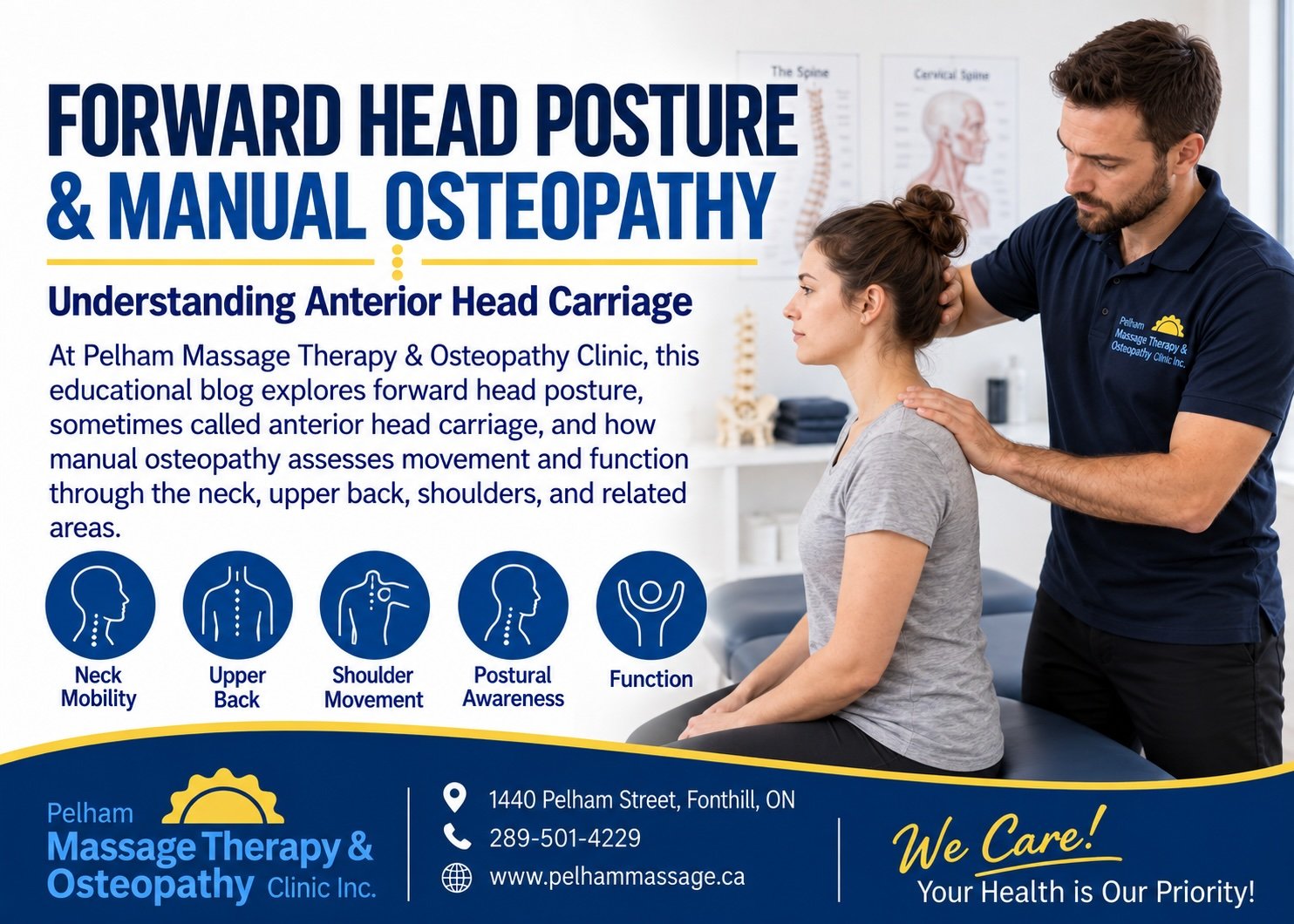
Forward head posture, sometimes called anterior head carriage, describes a position in which the head rests farther forward in relation to the shoulders and upper body. It is commonly noticed during activities such as computer work, studying, driving, and prolonged use of phones or other devices.
Forward head posture does not necessarily mean something is wrong, and posture naturally changes throughout the day. However, some people notice neck or upper-back stiffness, muscle tension, or changes in movement alongside prolonged postural positions.
At Pelham Massage Therapy & Osteopathy Clinic in Fonthill, manual osteopathy includes hands-on assessment of movement and musculoskeletal function based on each individual's presentation and health history.
What Is Forward Head Posture?
In a neutral position, the head is generally positioned over the shoulders. With forward head posture, the head sits farther forward relative to the upper body.
The term anterior head carriage may also be used to describe this position.
Forward head posture can be influenced by many everyday factors, including:
Prolonged computer or desk work
Phone and tablet use
Reading or studying for extended periods
Driving
Repetitive work positions
Changes in upper-back or shoulder mobility
Habitual movement and positioning
There is no single “perfect” posture that needs to be maintained throughout the day. Regular movement and changing positions are also important parts of normal musculoskeletal function.
What Areas of the Body May Be Considered?
The head and neck do not move independently from the rest of the upper body. During an osteopathic assessment, the practitioner may consider movement in several related areas.
Neck Mobility
Movement of the cervical spine may be assessed to identify areas that feel restricted, stiff, or uncomfortable.
Upper Back
The thoracic spine contributes to posture and upper-body movement. Its mobility may be assessed when relevant to the individual's concern.
Shoulders and Shoulder Blades
Movement of the shoulders and scapulae may influence how the neck and upper back move during daily activities.
Rib Cage
The ribs and thoracic region move together during breathing and upper-body movement and may form part of an osteopathic assessment.
Hips and Pelvis
Depending on the person's presentation, an osteopathic practitioner may also assess other regions of the body that contribute to overall movement and positioning.
How Does Osteopathy Approach Forward Head Posture?
Manual osteopathy uses hands-on assessment and treatment to examine mobility and function within the musculoskeletal system.
Rather than focusing only on the position of the head, an osteopathic assessment may consider how the neck, upper back, shoulders, ribs, and other relevant areas move together.
Treatment is individualized and may include hands-on techniques selected according to the assessment findings, health history, and presenting concern.
The goal is not to force the body into a particular posture. Instead, osteopathic care may focus on areas of mobility or restriction that are relevant to the individual's movement and comfort.
Is Forward Head Posture the Same as “Tech Neck”?
The terms are related but are not exactly the same.
Forward head posture or anterior head carriage describes the position of the head relative to the upper body.
“Tech neck” is an informal term commonly used to describe neck or upper-back discomfort associated with prolonged use of phones, computers, tablets, or similar devices.
A person can have forward head posture without pain, and neck discomfort can occur without obvious forward head posture.
When Might Someone Seek an Osteopathic Assessment?
People may choose to consult an osteopathic manual practitioner when they notice concerns such as:
Neck or upper-back stiffness
Changes in neck mobility
Shoulder or upper-back tension
Discomfort associated with prolonged desk or computer work
Posture-related concerns
Changes in movement during everyday activities
Every person's presentation is different, so assessment and treatment are individualized.
What to Expect During an Osteopathic Appointment
An osteopathic appointment begins with a health history and assessment.
The practitioner may observe and assess:
Neck movement
Upper-back mobility
Shoulder and shoulder-blade movement
Rib-cage mobility
Relevant movement patterns
Other musculoskeletal areas related to the individual's concern
Hands-on osteopathic techniques may then be selected according to the assessment findings and individual needs.
If symptoms are new, severe, worsening, associated with significant trauma, or accompanied by symptoms such as weakness, numbness, dizziness, severe headache, or other unusual neurological symptoms, medical assessment may be appropriate.
Osteopathy in Fonthill, Pelham and Niagara Region
Pelham Massage Therapy & Osteopathy Clinic is located in Fonthill and provides manual osteopathy for individuals from Pelham and surrounding Niagara communities, including Welland, St. Catharines, Thorold, Niagara Falls, Port Colborne, and Niagara-on-the-Lake.
Related Services
Osteopathy
Connect With Us
📅 Book Online
📞 289-501-4229
📍 1440 Pelham Street, Fonthill, Ontario
We Care! Your Health is Our Priority!
Published by Pelham Massage Therapy & Osteopathy Clinic Inc.