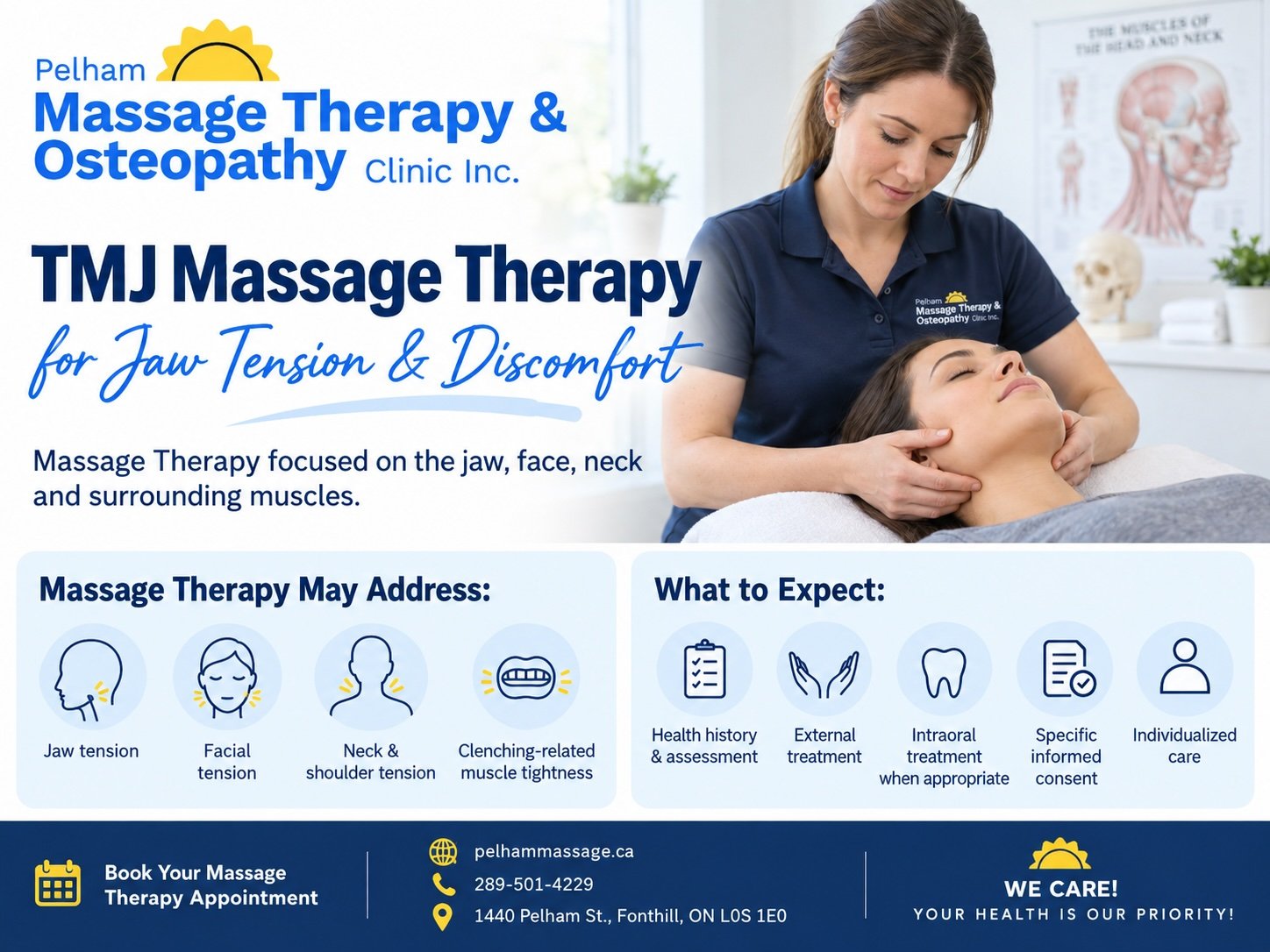
TMJ Massage Therapy for Jaw Tension & Discomfort
Pelham Massage Therapy & Osteopathy Clinic
We Care! Your Health Is Our Priority!
Jaw tension, facial muscle tightness, clenching, grinding, and discomfort around the temporomandibular joint can make everyday activities such as chewing, speaking, and yawning uncomfortable.
At Pelham Massage Therapy & Osteopathy Clinic in Fonthill, Registered Massage Therapists provide Massage Therapy for clients experiencing muscular tension involving the jaw, face, neck, and surrounding areas.
Treatment is individualized according to each client’s health history, assessment findings, symptoms, treatment goals, and informed consent.
What Is the TMJ?
The temporomandibular joint, commonly called the TMJ, connects the lower jaw to the skull.
This joint works together with the muscles of the jaw, face, and neck during movements such as talking, chewing, yawning, and opening or closing the mouth.
People may experience symptoms around this area for many different reasons, and not all jaw symptoms have the same cause.
Common concerns may include:
Jaw muscle tension
Jaw discomfort
Clicking or popping
Tightness associated with clenching or grinding
Facial muscle tension
Neck and shoulder tension
Difficulty or discomfort with opening the mouth
Head or facial discomfort
A Registered Massage Therapist does not diagnose temporomandibular disorders. Clients with persistent, severe, or unexplained symptoms may also require assessment by a dentist, physician, or another appropriate healthcare professional.
How Massage Therapy May Address Jaw Muscle Tension
Massage Therapy may be used to assess and treat muscles and soft tissues surrounding the jaw, as well as related areas of the face, neck, and shoulders.
Depending on the assessment, treatment may focus on muscles involved in jaw movement and other areas of muscular tension associated with the client’s symptoms.
Treatment may involve:
Jaw muscles
Facial muscles
Neck muscles
Shoulder muscles
Other related soft tissues
The exact treatment varies from client to client and is based on assessment findings, comfort, goals, and informed consent.
External and Intraoral TMJ Massage Therapy
TMJ-focused Massage Therapy may include both external and intraoral treatment.
External Treatment
External treatment may involve hands-on work to muscles and soft tissues around the:
Jaw
Cheeks
Temples
Neck
Shoulders
Intraoral Treatment
When clinically appropriate, a Registered Massage Therapist may also provide intraoral treatment, which involves treating specific muscles from inside the mouth.
Intraoral treatment is not performed for every client. It requires specific informed consent and should be clearly explained before treatment begins.
Clients may ask questions, modify their consent, or stop intraoral treatment at any time.
What Happens During a TMJ Massage Therapy Appointment?
Before treatment begins, your Registered Massage Therapist will discuss your health history, current concerns, and treatment goals.
An assessment may include observation and evaluation of:
Jaw movement
Muscular tension
Neck and shoulder involvement
Areas related to your symptoms
Your therapist will explain the proposed treatment before beginning.
Depending on your assessment and preferences, treatment may include:
External hands-on treatment
Intraoral treatment when appropriate
Treatment to related neck and shoulder muscles
Ongoing reassessment during the appointment
Your comfort and consent remain important throughout the treatment.
Massage Therapy for Jaw Clenching and Muscle Tension
Clenching and grinding can place increased demands on the muscles involved in jaw movement.
Some clients seek Massage Therapy when they notice muscular tightness around the jaw, temples, face, neck, or shoulders associated with these habits.
Massage Therapy focuses on the muscles and soft tissues within the Registered Massage Therapist’s scope of practice.
It does not replace dental assessment or treatment for concerns such as tooth damage, bite changes, dental pain, or other dental conditions.
When Should Jaw Symptoms Be Assessed by Another Healthcare Professional?
Massage Therapy may not be appropriate as the only form of care for every jaw concern.
Consider seeking medical or dental assessment if you experience:
Significant or worsening jaw pain
Jaw locking
Recent trauma
Significant swelling
New numbness or neurological symptoms
Dental pain
Suspected tooth or bite problems
Persistent symptoms without a known cause
Difficulty eating
Significant difficulty opening or closing the mouth
Your Registered Massage Therapist may also recommend further assessment when symptoms appear to fall outside the scope of Massage Therapy.
TMJ Massage Therapy in Fonthill & Pelham
Pelham Massage Therapy & Osteopathy Clinic provides Massage Therapy in Fonthill, Pelham, for clients from Welland, Thorold, St. Catharines, Niagara Falls, Port Colborne, and surrounding communities throughout the Niagara Region.
TMJ-focused Massage Therapy is provided by Registered Massage Therapists and is individualized according to each client’s assessment findings, treatment goals, and informed consent.
Book a TMJ Massage Therapy Appointment
If you are experiencing jaw muscle tension, facial tension, clenching-related tightness, or discomfort involving the jaw and surrounding muscles, a Registered Massage Therapist can assess whether Massage Therapy is appropriate for your concern.
Visit pelhammassage.ca to learn more or book a Massage Therapy appointment.
Pelham Massage Therapy & Osteopathy Clinic
We Care! Your Health Is Our Priority!Related Services
Book Your TMJ Massage Therapy Appointment Today
If you are experiencing jaw muscle tension, facial tension or discomfort involving the jaw and surrounding muscles, a Registered Massage Therapist can assess whether Massage Therapy is appropriate for your concern.
🌐 Website
📞 Call Us: 289-501-4229
You don’t have to live with chronic jaw pain, headaches, or tension. Massage therapy may help relieve TMJ symptoms naturally while improving your comfort and overall well-being.
Marjorie Dickson, RMT